Dishwasher Not Draining? How to Clear the Blockage

Standing water in a dishwasher almost always means a blockage: a clogged filter, food in the sump, a kinked drain hose, or a blocked sink drain, garbage disposal or air gap where the hose empties. Switch the dishwasher off, clean the filter and sump, straighten the hose, and clear the sink drain.

If you have just installed a new garbage disposal, its knockout plug may still be blocking the dishwasher inlet.

By , maker of TalkFixAI · Published

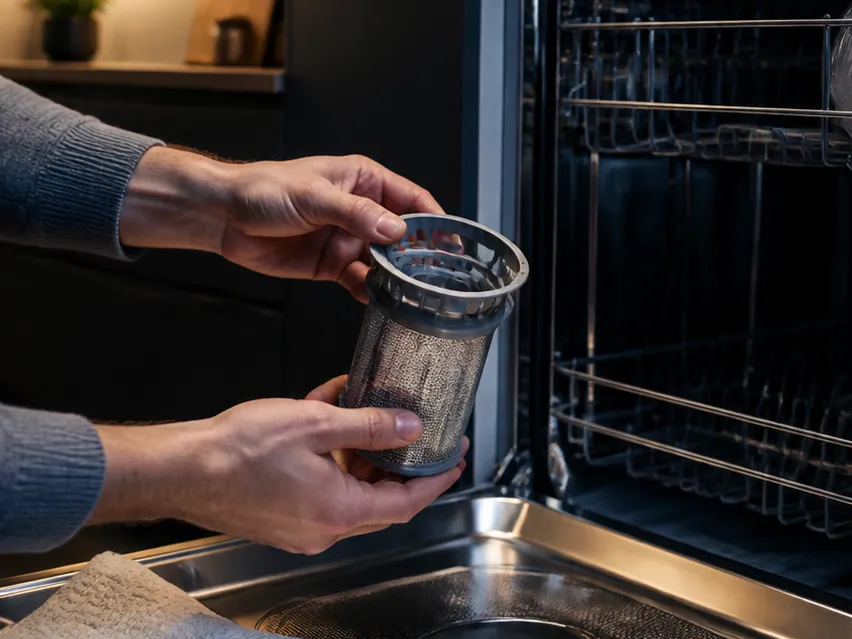
Hands lifting the cylindrical mesh filter out of the bottom of an open dishwasher

Filter, hose, drain: work from the inside out

  1. Step 1: Switch it off and note any error code

    Write down any code or flashing light on the display, then switch the dishwasher off. If you stopped a cycle part-way through, some water in the bottom is expected: run a short rinse or drain cycle, or the cancel or drain option in your manual, before you assume it is blocked.

  2. Step 2: Clean the filter and the sump

    Take out the bottom rack. Twist out the filter (usually a mesh cylinder with a flat mesh plate) as your manual shows. Rinse both under warm running water with a soft brush; Whirlpool advises against abrasive pads. Scoop any standing water out with a cup and sponge, remove food, labels, seeds or glass from the sump below, then refit the filter so it locks in place.

  3. Step 3: Check the drain hose

    Look under the sink at the dishwasher's drain hose. Straighten any kinks or crushed sections, and check it isn't sagging. Whirlpool says the hose should be looped up and fixed to the underside of the counter (a high loop), or connected through an air gap, so dirty water can't flow back into the dishwasher.

  4. Step 4: Clear where the hose drains

    If the hose drains into a garbage disposal, run the disposal with cold water to clear it. If your sink has an air gap (a small cap on the worktop next to the tap), remove the cap and clean out any debris. If the kitchen sink itself drains slowly, clear that blockage first: the dishwasher can't drain into a blocked pipe.

  5. Step 5: New garbage disposal? Check the knockout plug

    New garbage disposals come with a plastic knockout plug in the dishwasher inlet. Whirlpool warns that if it isn't removed, it blocks drainage completely. If your disposal was just installed or replaced, ask the installer or a plumber to check it.

  6. Step 6: Run a test cycle

    Switch the power back on and run a rinse or short cycle with the dishwasher empty. Listen for the drain pump and check the water has gone at the end. Clean the filter regularly from now on, more often if you don't scrape plates before loading.

Why a dishwasher doesn't drain

At the end of each wash, a drain pump pushes water from the sump at the bottom of the tub, through the filter, out of the drain hose and into the sink drain, garbage disposal or a standpipe. A clogged filter or food in the sump is the most common cause. A kinked hose, a blocked air gap or disposal, or a slow kitchen drain stops the water further along. A failed drain pump or a control fault is less common and needs service.

Whirlpool notes that a little water above the filter suggests a partial restriction, while water up near the door suggests a severe blockage or a pump that isn't running.

Installations in India and the US

In US kitchens the drain hose usually runs to the sink drain or a garbage disposal, often through an air gap. In many Indian kitchens the hose drains into the sink waste pipe or a floor drain. Wherever it ends, the end must be clear, the hose must not be pushed too far into the pipe, and the pipe itself must drain freely.

Before you call for service

Note the brand and model, any error code, how much water is left, whether you hear the pump running, and what you have already cleaned. That helps a technician tell a blockage from a pump or control fault.
Parts and tools you may need

Most fixes in this guide need no parts, so do the checks first. If you do need one, match it to your brand and model before you buy.

As an Amazon Associate, AICK Studio earns from qualifying purchases. It does not change the price you pay.

When to book an appliance technician

Call a qualified appliance technician if:

  • the filter, sump, hose and sink drain are clear and it still won't drain,
  • you hear humming but no water moves, or hear nothing at all at the end of the cycle,
  • the same drain error code returns,
  • water leaks from under the dishwasher,
  • it trips the MCB or breaker, or you smell burning.

Call a plumber if the kitchen sink and other drains are also slow or blocked.

Dishwasher draining questions

Why is there water in the bottom of my dishwasher?

The most common cause is a clogged filter or food in the sump. A kinked drain hose, a blocked garbage disposal or air gap, or a slow kitchen drain can also stop it draining. If you stopped a cycle part-way, run a drain or rinse cycle first.

How do I clean a dishwasher filter?

Switch the dishwasher off, take out the bottom rack and twist out the filter as your manual shows. Rinse it under warm water with a soft brush, clear the sump below, and lock the filter back in place.

Can a garbage disposal stop a dishwasher draining?

Yes. A full or blocked disposal stops the dishwasher water getting out, so run it with cold water first. On a newly installed disposal, a knockout plug left in the dishwasher inlet blocks drainage completely.

What is a dishwasher air gap?

A dishwasher air gap is a small fitting, usually a cap on the worktop by the tap, that stops dirty sink water flowing back into the dishwasher. If debris blocks it, water may spill out of it or the dishwasher may drain slowly. Remove the cap and clean it out.

Is it normal for a little water to stay in the dishwasher?

A small amount in the sump under the filter can be normal on some models, especially if a cycle was interrupted. Water above the filter or up near the door means it isn’t draining properly.

Checked against: Whirlpool: Dishwasher not draining.

How TalkFixAI talks you through a fix

The screens below illustrate a TalkFixAI conversation that follows the steps in this guide. Your own conversation will depend on what you describe.

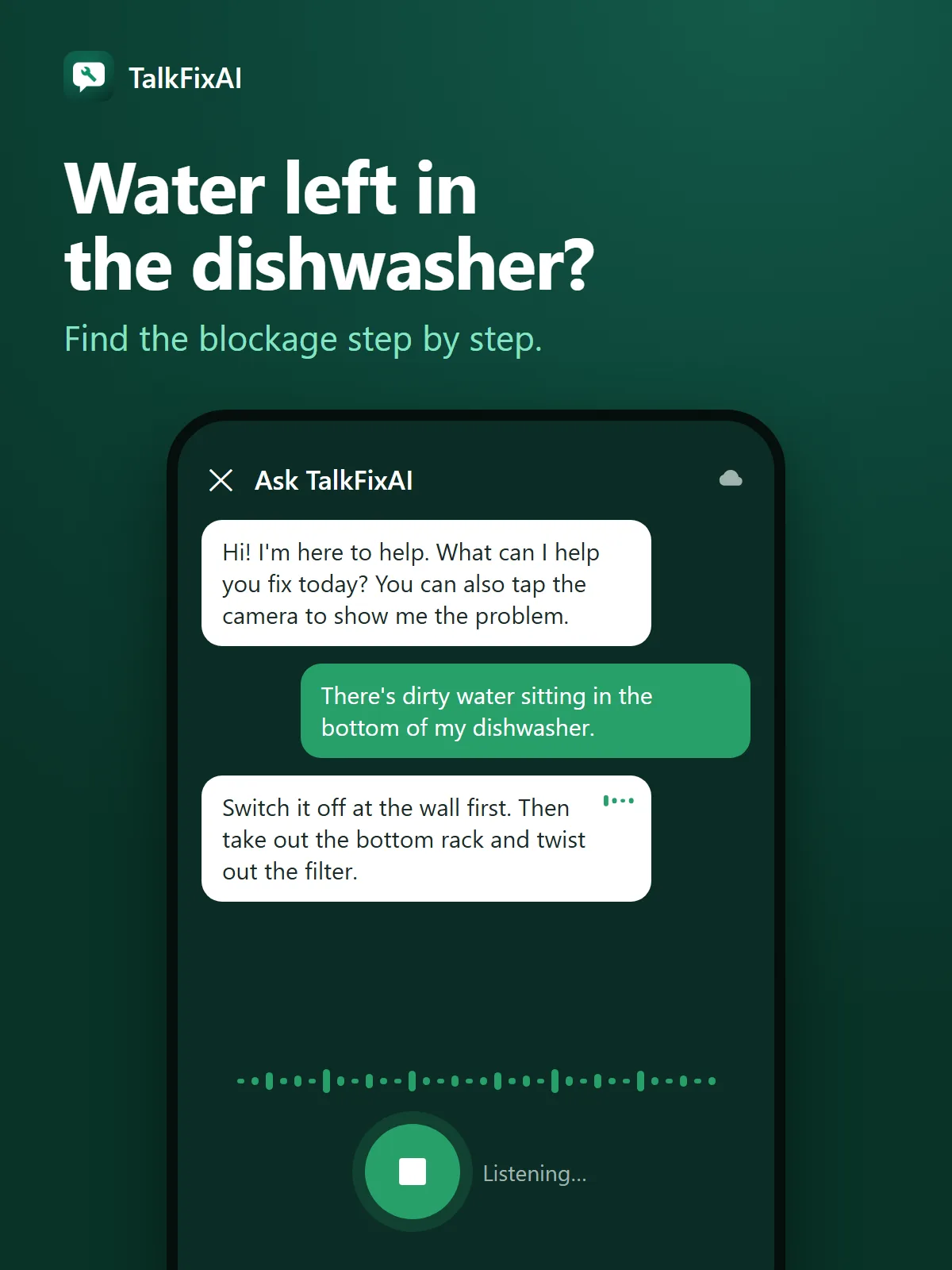
  1. Illustrated TalkFixAI chat. You: “There's dirty water sitting in the bottom of my dishwasher.” TalkFixAI: “Switch it off at the wall first. Then take out the bottom rack and twist out the filter.”
    Step 1Water left in the dishwasher?Find the blockage step by step.
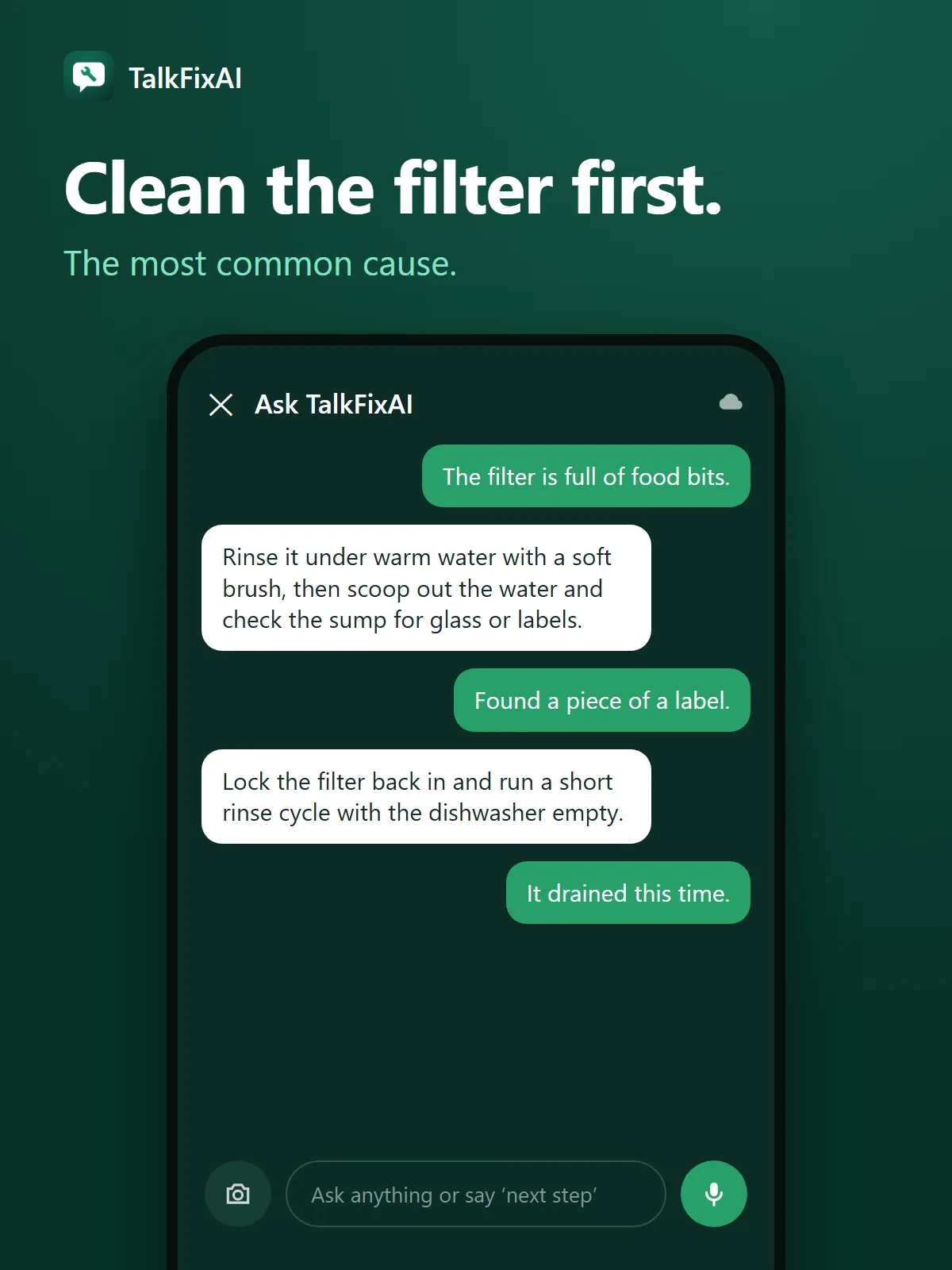
  2. Illustrated TalkFixAI chat. You: “The filter is full of food bits.” TalkFixAI: “Rinse it under warm water with a soft brush, then scoop out the water and check the sump for glass or labels.”
    Step 2Clean the filter first.The most common cause.
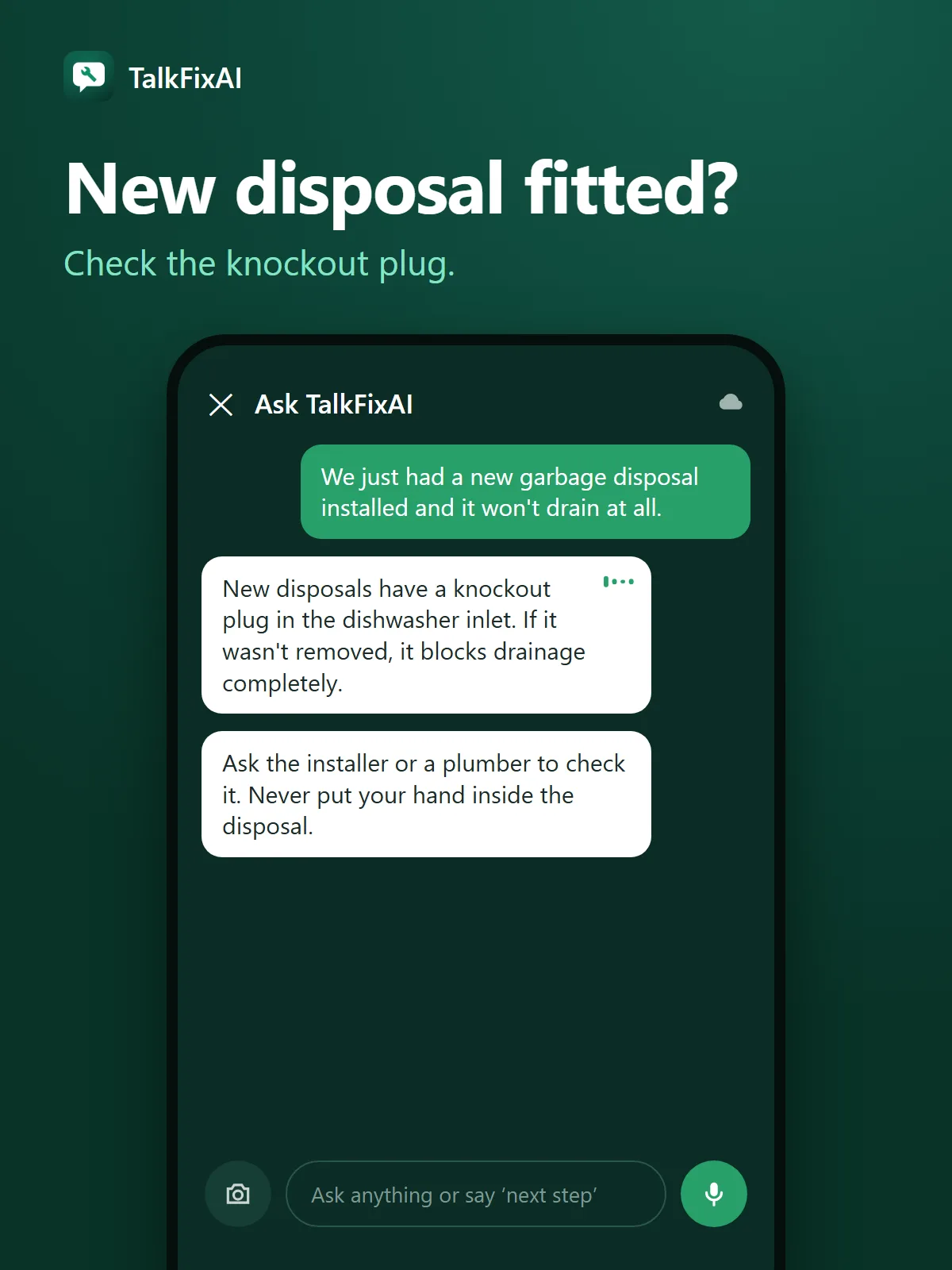
  3. Illustrated TalkFixAI chat. You: “We just had a new garbage disposal installed and it won't drain at all.” TalkFixAI: “New disposals have a knockout plug in the dishwasher inlet. If it wasn't removed, it blocks drainage completely.”
    Step 3New disposal fitted?Check the knockout plug.

Want TalkFixAI to talk you through this repair hands-free while your hands are busy? Try TalkFixAI, the free repair assistant that answers by voice, even offline.

Other appliance problems