Why a fridge stops cooling
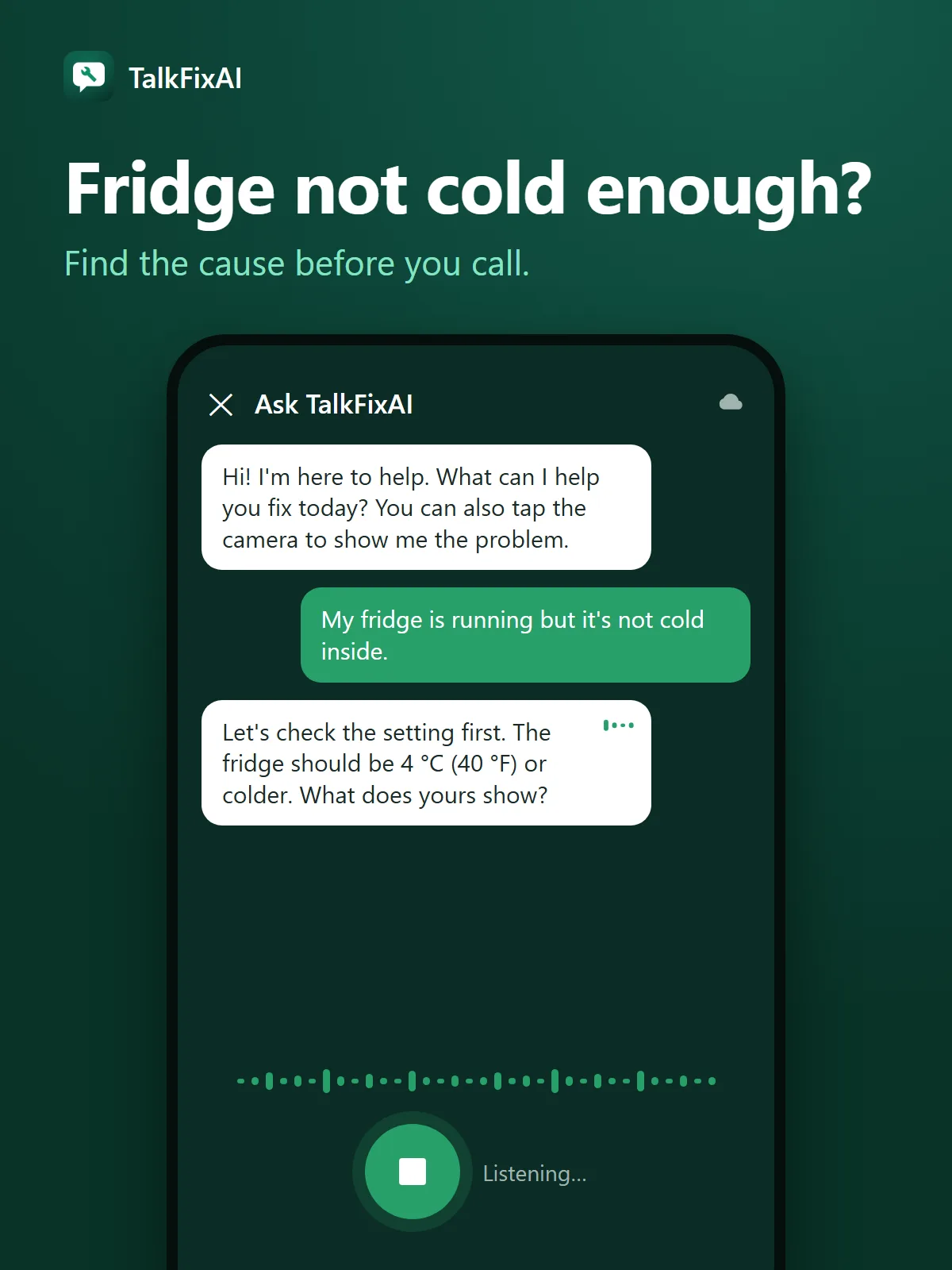
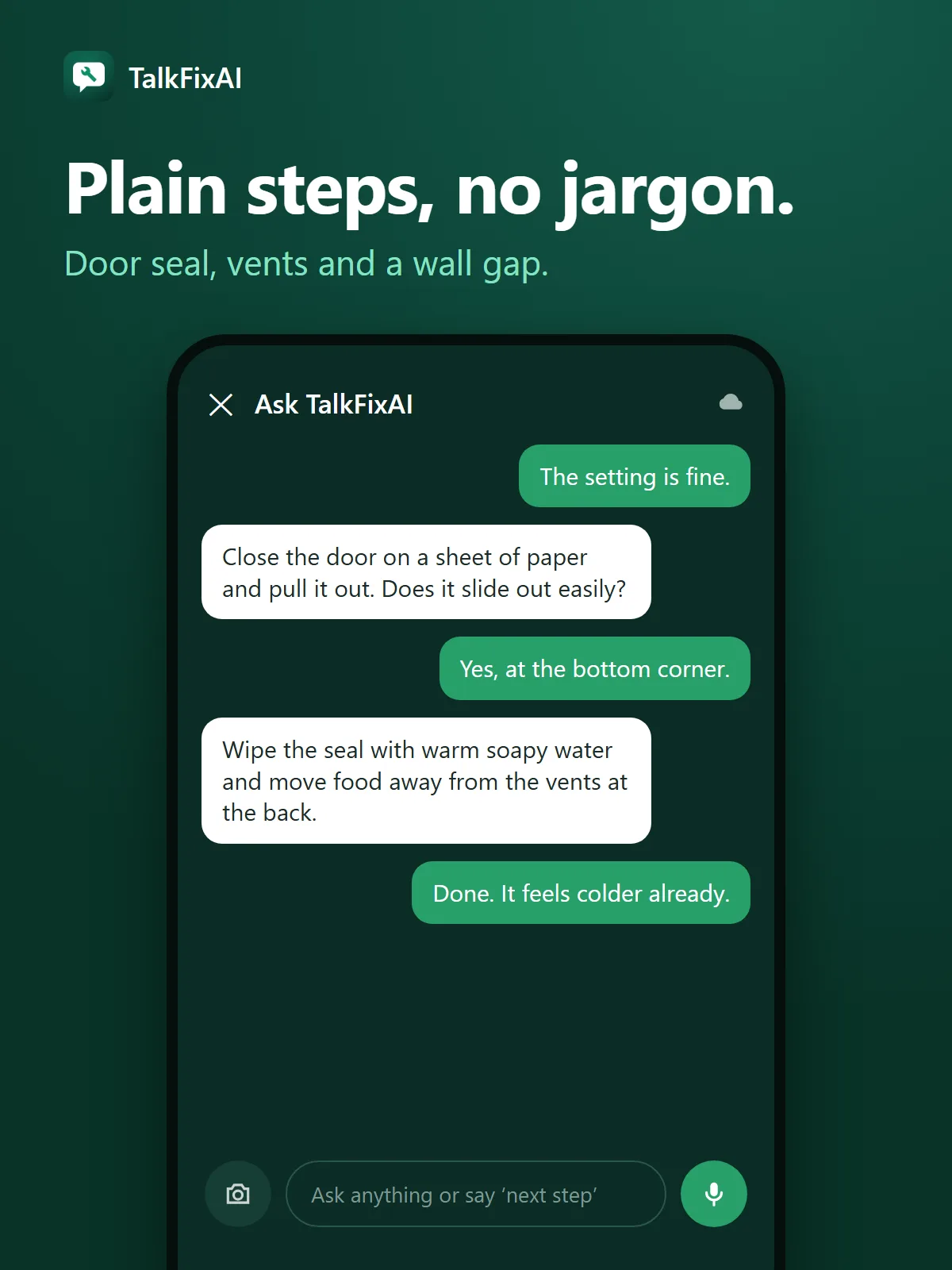
A fridge moves heat from inside the cabinet to the coils at the back. Cooling suffers when warm air leaks in (a poor door seal), cold air cannot circulate (blocked vents or an overloaded shelf), or heat cannot escape (no gap behind the fridge, dusty coils or a hot room). Those are safe to check yourself. A failed compressor, fan, defrost part, control board or a refrigerant leak is not.
If the freezer is cold but the fresh-food section is warm, the problem is often airflow between the two: blocked vents or, on frost-free models, ice on the evaporator behind the freezer wall.
New fridge, hot weather and power cuts
A newly installed fridge needs time before it is fully cold: LG India says it may take 2–3 days in summer, and Whirlpool says a new freezer needs a full day. Very hot kitchens, or a fridge on a balcony or in a garage, can also push it beyond its design range. LG India gives 5–43 °C (41–109 °F) as the room temperature range its fridges run best in.
In areas with frequent low voltage, check the manual to see whether your model needs a voltage stabiliser. After a power cut, keep the door closed as much as possible until power returns.
Write this down before you call
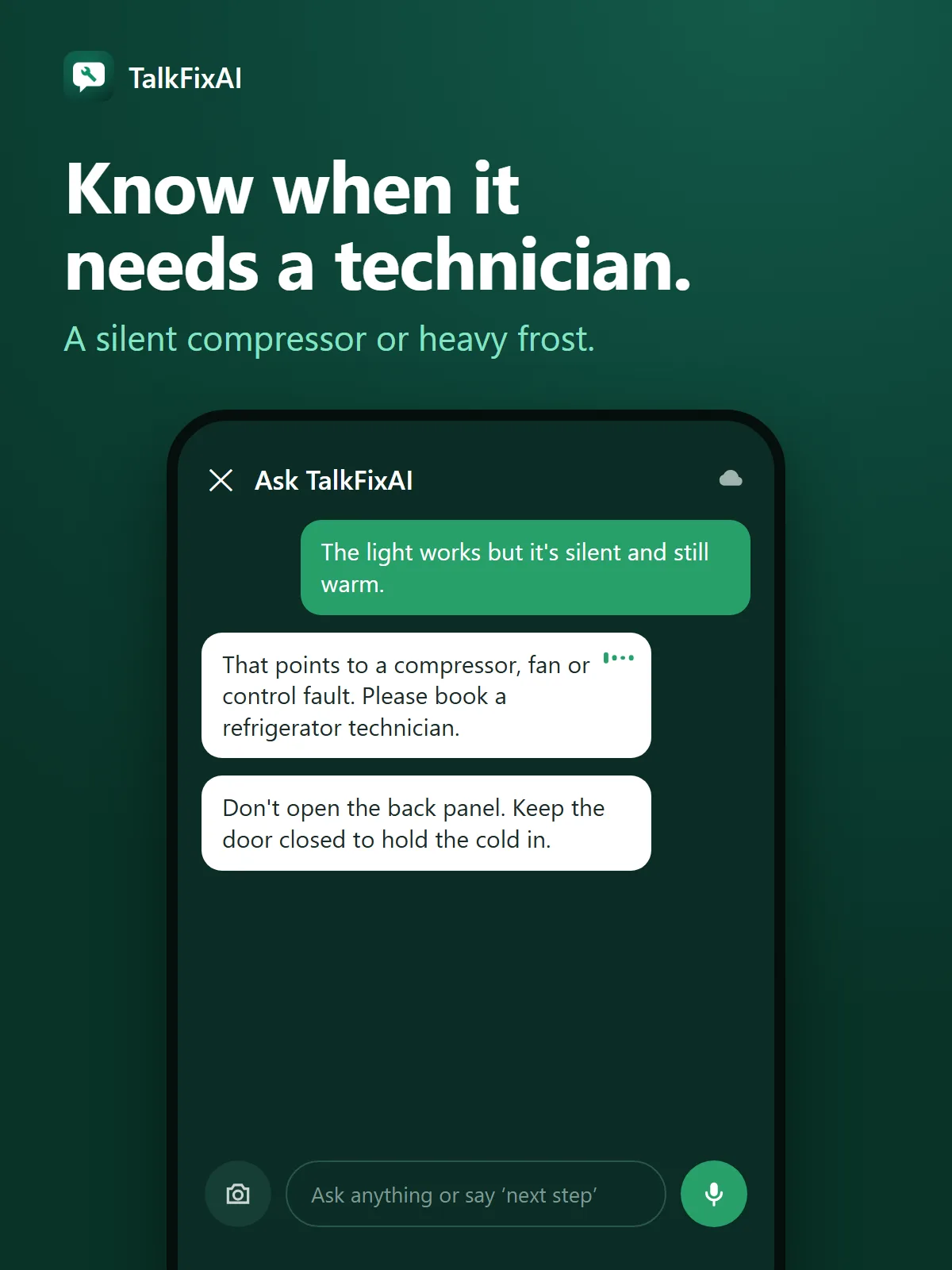
Note the brand, model and age of the fridge, what the thermometer reads inside each section, whether the light comes on, whether you hear the compressor hum or the fan run, and whether you see frost. That record helps a technician come with the right parts.