Storage, instant and gas: how each one heats
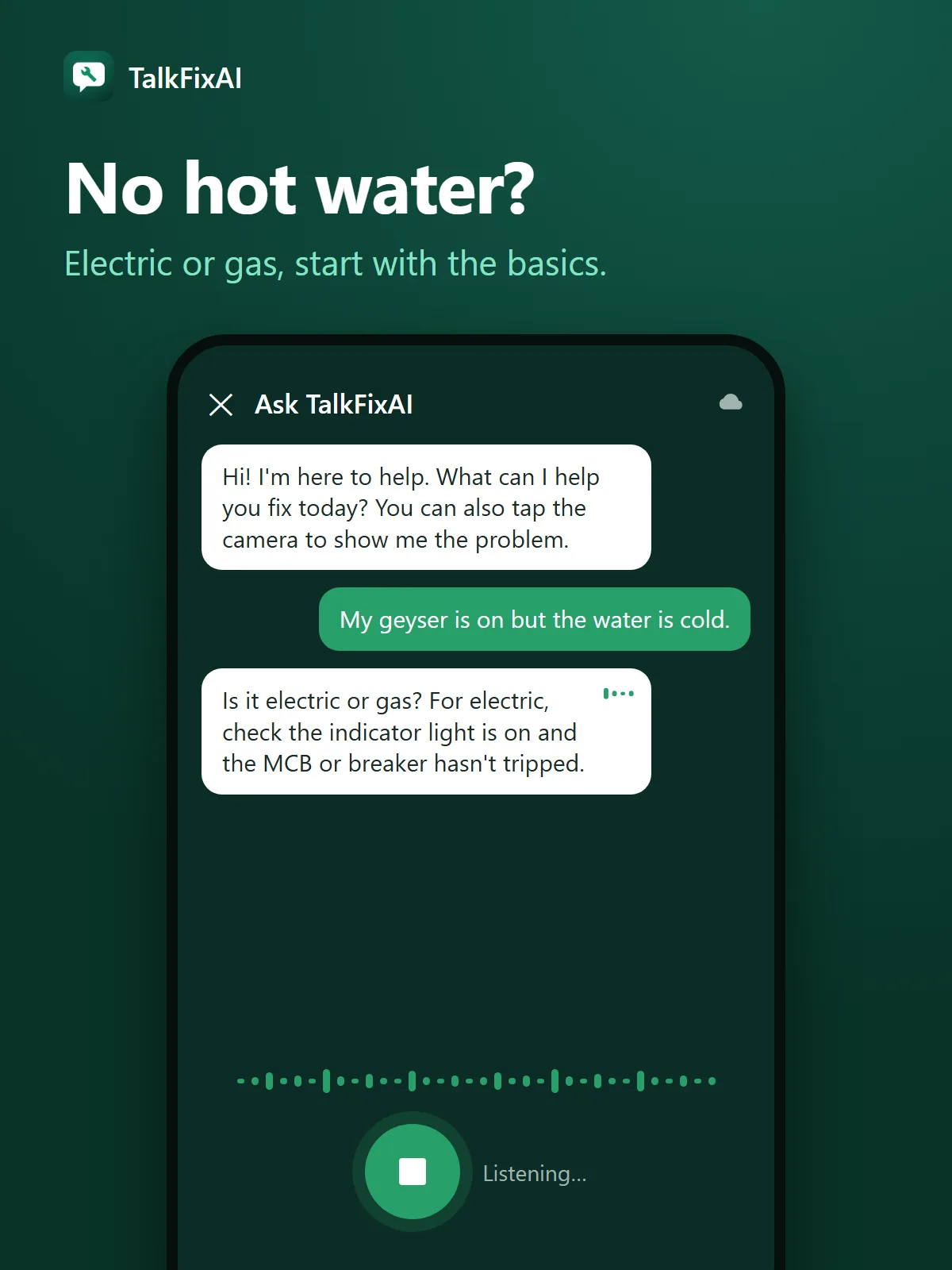
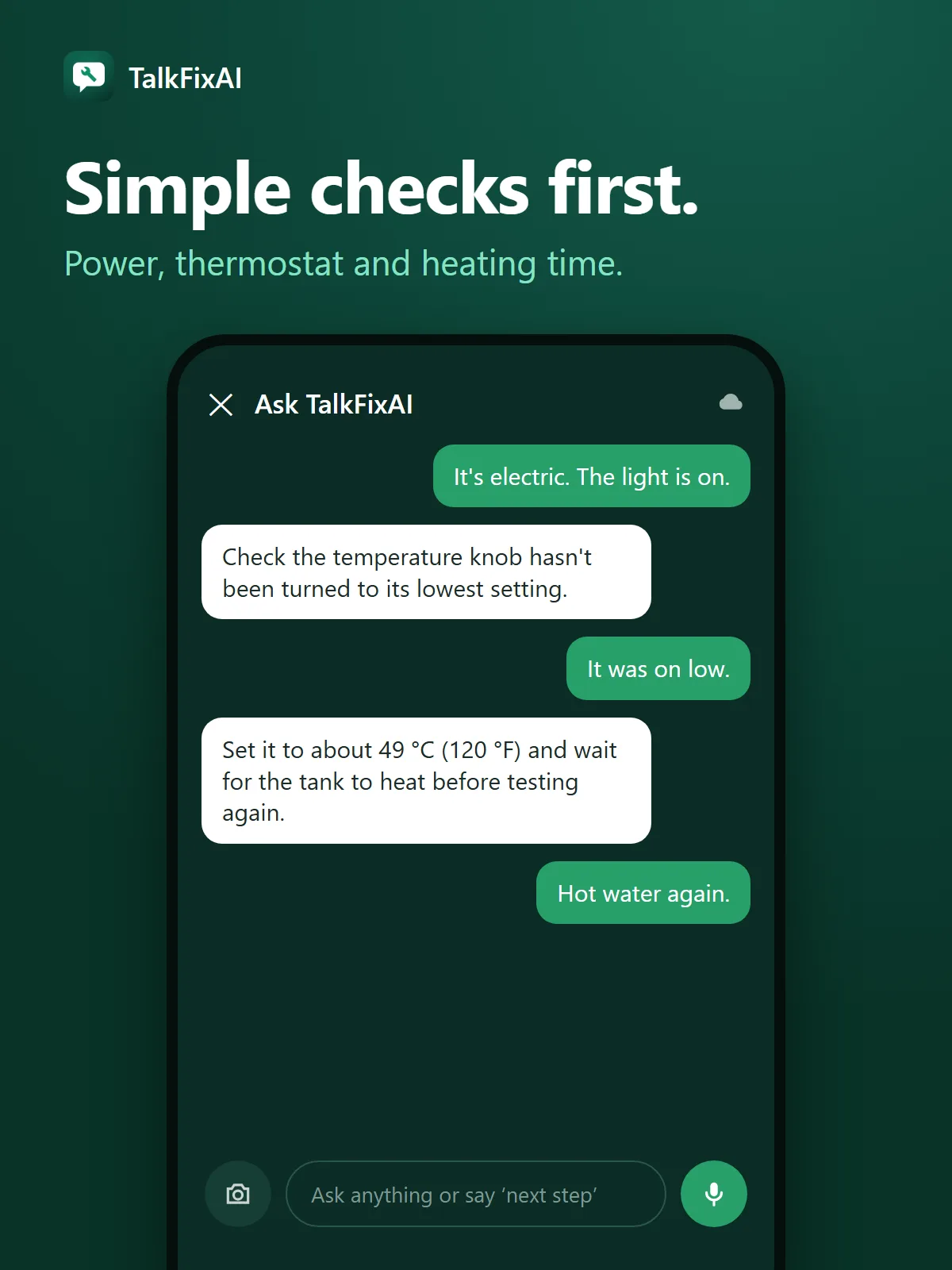
- Electric storage geyser or tank water heater: a heating element warms a tank of water (often 10–25 litres for a bathroom geyser in India, and 150–300 litres, or 40–80 gallons, for many US tanks). A thermostat switches the element off when the water is hot. If the element, thermostat or safety cut-out fails, the tank stays cold even with the light on.
- Instant electric geyser: a small, high-power unit for a kitchen or wash basin. It heats quickly but runs out of hot water fast.
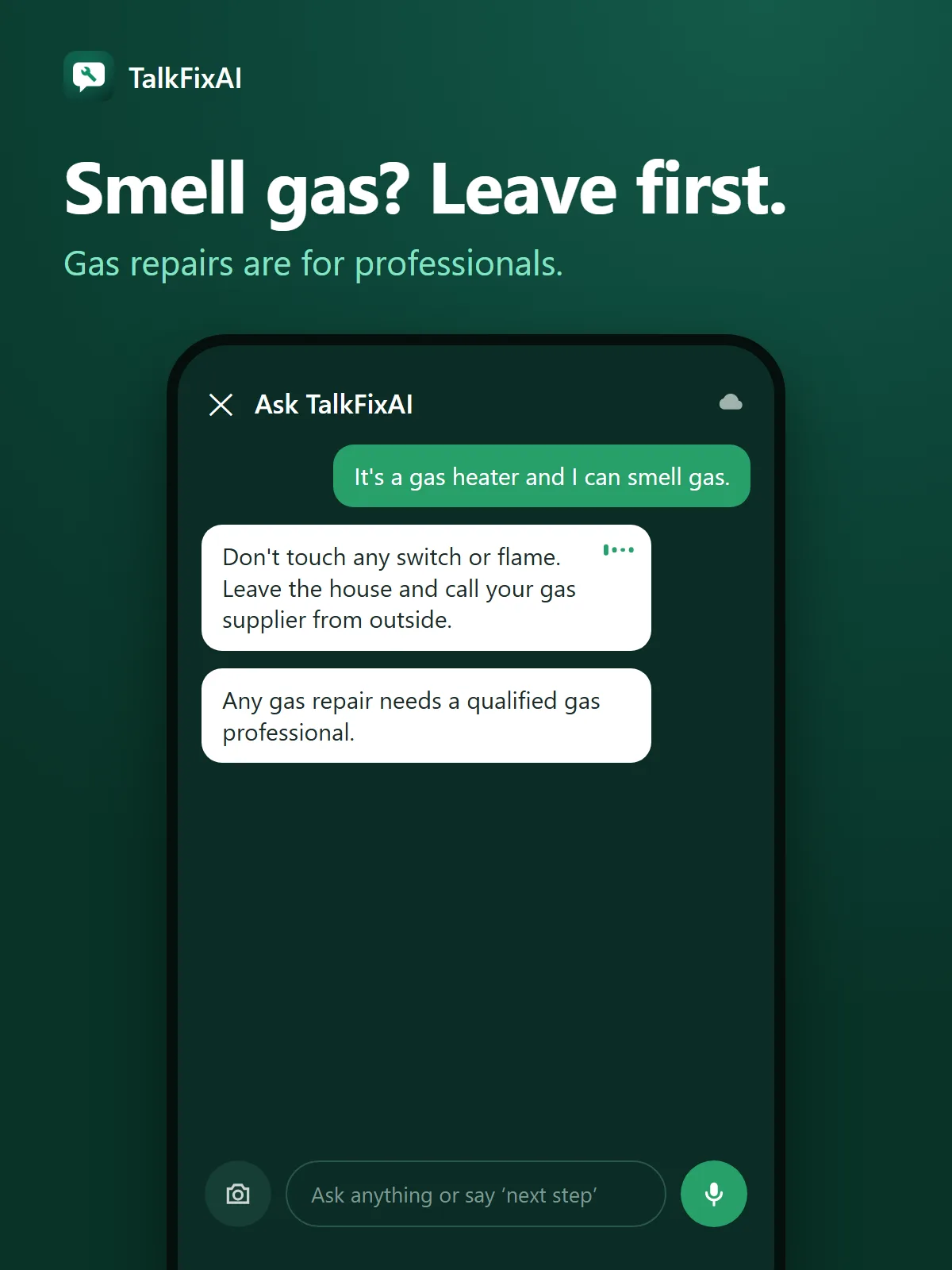
- Instant gas geyser (tankless): lights a burner only when water flows. Low water pressure, weak ignition batteries or an empty LPG cylinder stop it lighting.
- Gas tank water heater: keeps a tank hot using a burner, often lit by a pilot flame.
Hot water that runs out too fast
If you get some hot water but less than usual, the tank may be too small for the number of people using it, the thermostat may be set low, or one heating element may have failed. In hard-water areas, scale and sediment build up in the tank and reduce its capacity and efficiency over time. Flushing a tank or descaling an element should follow the manufacturer's instructions, or be done by a technician.
Leaks and the safety valve
Every storage heater has a safety valve that releases water if pressure or temperature gets too high. If water drips from the valve or the tank itself, switch the heater off at the wall switch and MCB or breaker, close the cold-water inlet, and call a technician. A leaking tank cannot usually be repaired.