Snow Blower Won’t Start? What to Check First

Most snow blowers that won't start have old fuel, a closed fuel valve or the wrong primer and choke settings. Toro calls old gasoline the most common cause and recommends fuel less than 30 days old. Check the fuel, open the fuel valve, insert the key, then prime and choke for the temperature.

If you smell gas, clear the flooded engine before trying again.

By , maker of TalkFixAI · Published

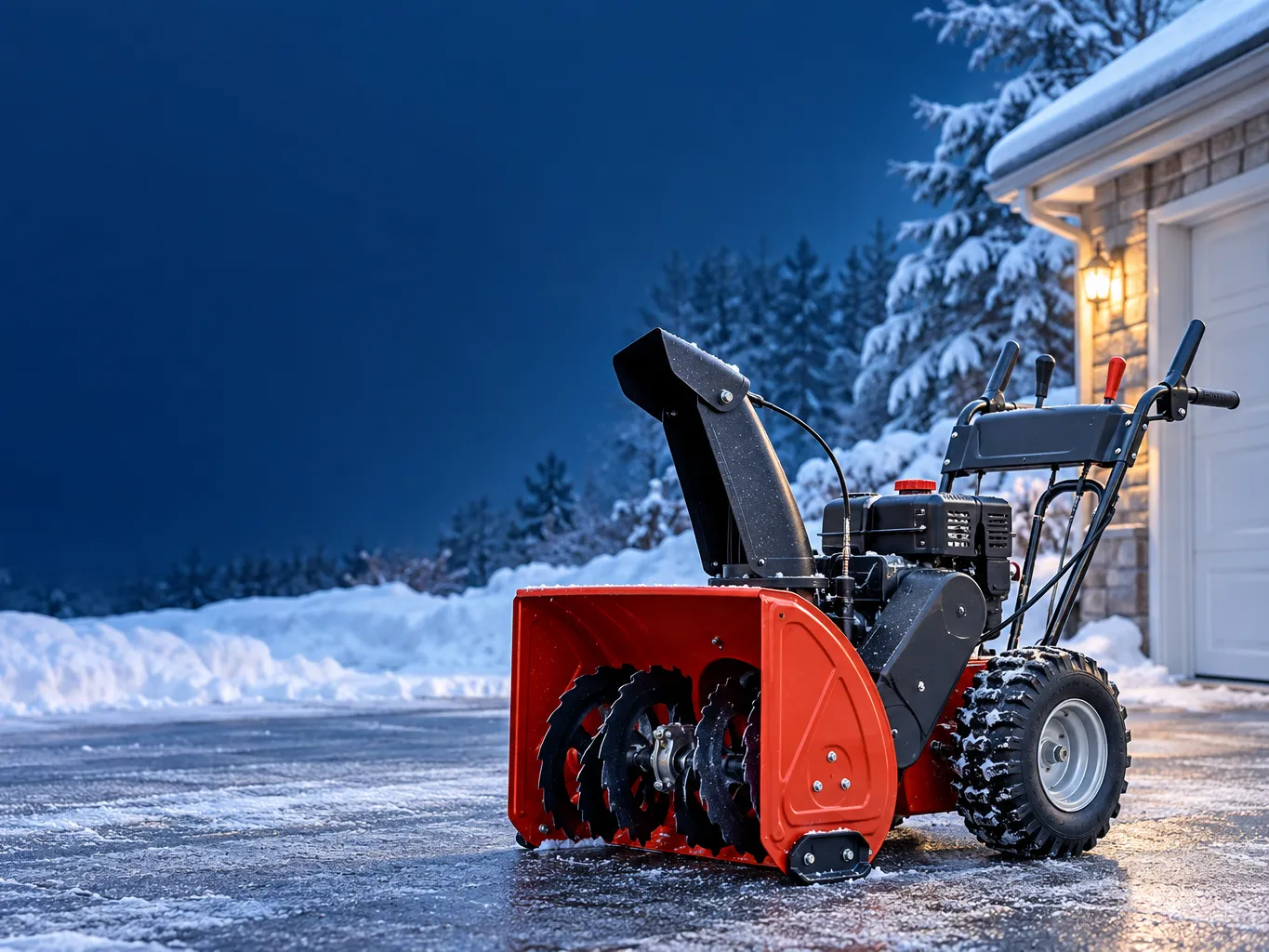
A red two-stage snow blower parked on an icy driveway outside a garage on a winter evening

Fuel, prime and choke, then the spark plug

  1. Step 1: Check the fuel is fresh

    Look in the tank and smell the fuel. Toro recommends gasoline (petrol) less than 30 days old, because the parts of fuel that help an engine start are the first to go stale. If the fuel has been in the machine since last winter, drain it as your manual describes, outdoors with the engine cool, and refill with fresh fuel. Adding a fuel stabiliser when you buy fuel helps it keep for longer.

  2. Step 2: Open the fuel valve and insert the key

    Many two-stage snow blowers have a fuel shut-off valve under or beside the tank. Make sure it is open. Then push the safety or ignition key fully into place: most snow blowers will not start without it.

  3. Step 3: Prime and choke for the temperature

    Press the primer bulb firmly. Toro's guide is about two presses at 15 °F (−9 °C) or warmer and four presses below that. Set the throttle to fast and the choke to on, fully closed when the engine is cold. At 30 °F (−1 °C) and above, Toro says the choke can be half to three-quarters open. Follow your own manual if it gives different numbers.

  4. Step 4: Start it and let the electric starter rest

    For a recoil start, pull the cord smoothly, not in short jerks. For an electric start, plug the extension cord into the snow blower first, then the wall socket. Toro advises holding the start button for up to five seconds at a time, waiting at least 10 seconds between attempts, and trying no more than 10 times so the starter does not burn out. Once the engine runs, move the choke gradually to run.

  5. Step 5: Clear a flooded engine

    If you smell fuel after several tries, the engine has probably been over-primed. Toro's fix: close the fuel valve if your model has one, turn the choke off, pull the recoil cord three times to clear the extra fuel, then wait 15 minutes before trying again with the fuel valve open.

  6. Step 6: Check the spark plug

    With the engine cool and the spark plug wire disconnected, remove the plug. Briggs & Stratton explains that a wet plug means fuel is reaching the engine, so the problem may be ignition, while a dry plug points to a fuel problem, often a carburettor clogged by stale fuel. Replace a dirty or damaged plug with the type in your manual and reconnect the wire.

Why a snow blower won't start

A petrol (gasoline) snow blower needs three things to start: fresh fuel reaching the engine, the right mix of fuel and air for the temperature, and a spark. Fuel left in the machine over the summer is the usual problem: it goes stale and can leave sticky deposits in the carburettor. Cold weather makes the choke and primer settings matter more, and too much priming floods the engine.

Single-stage and two-stage machines

  • Single-stage: smaller machines where the auger touches the ground. Many have no separate fuel valve, and some are electric or battery powered. For battery models, check that the battery is charged and seated and the safety key is in.
  • Two-stage: larger machines with an auger and a separate impeller that throws the snow. Most have a fuel shut-off valve, a primer and often an electric starter.

Before winter, and when you store it

Run the machine before the first snowfall so you find problems while dealers are less busy. At the end of the season, follow your manual for storage: either use a fuel stabiliser or run the tank dry, as the manual says. Stale fuel left over the summer is what causes most first-snow starting problems.

Before you call for service

Note the brand, model and engine, how old the fuel is, whether you smelled fuel, whether the spark plug was wet or dry, and what the engine did when you pulled the cord or pressed the starter. Those details help a dealer judge whether the carburettor needs cleaning.
Parts and tools you may need

Most fixes in this guide need no parts, so do the checks first. If you do need one, match it to your brand and model before you buy.

As an Amazon Associate, AICK Studio earns from qualifying purchases. It does not change the price you pay.

When to take it to a service dealer

Take the snow blower to an authorised service dealer if:

  • it still will not start with fresh fuel, the right primer and choke settings and a new spark plug,
  • the spark plug is dry after priming, which can mean a clogged carburettor,
  • you smell fuel or see fuel leaking when it is not running,
  • the recoil cord will not pull, or the engine knocks or smokes,
  • the electric starter clicks or hums without turning the engine.

Do not take the carburettor apart unless you have the right parts and experience.

Choke settings and other snow blower questions

Why won’t my snow blower start after summer storage?

The most common reason is stale fuel left in the tank and carburettor. Toro recommends fuel less than 30 days old. Drain the old fuel, refill with fresh fuel and try again; if it still will not start, the carburettor may need cleaning.

How many times should I prime a snow blower?

Toro’s guide is about two presses at 15 °F (−9 °C) or warmer and four presses below 15 °F. Your own manual may differ, so check it first. Too much priming can flood the engine.

How do I know if my snow blower is flooded?

A strong smell of fuel after several failed starts is the usual sign. Close the fuel valve if there is one, turn the choke off, pull the cord a few times and wait about 15 minutes before trying again.

Should I use the choke when starting a snow blower?

Yes, for a cold engine. Set the choke on (closed) to start, then move it gradually to run once the engine has warmed up. Toro says the choke can be partly open in milder weather and may not be needed if you restart within a few minutes.

Can I run a snow blower in the garage to warm it up?

No. Engine exhaust contains carbon monoxide, which can build up to dangerous levels indoors, even with the door open. Start and run it outdoors.

Checked against: Toro YardCare: How to start a snow blower; Briggs & Stratton: How to troubleshoot your snow blower not starting.

How TalkFixAI talks you through a fix

The screens below illustrate a TalkFixAI conversation that follows the steps in this guide. Your own conversation will depend on what you describe.

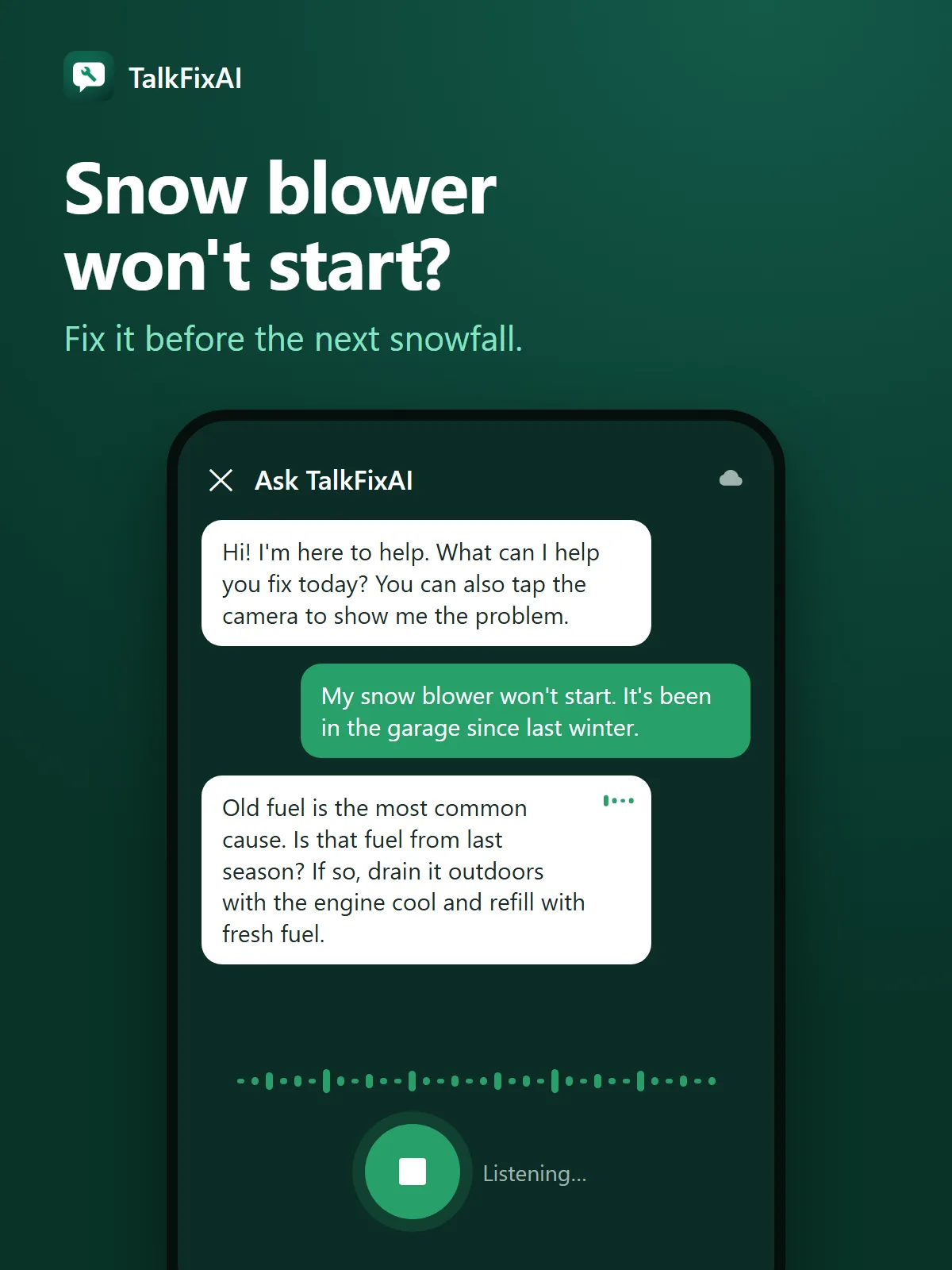
  1. Illustrated TalkFixAI chat. You: “My snow blower won't start. It's been in the garage since last winter.” TalkFixAI: “Old fuel is the most common cause. Is that fuel from last season? If so, drain it outdoors with the engine cool and refill with fresh fuel.”
    Step 1Snow blower won't start?Fix it before the next snowfall.
  2. Illustrated TalkFixAI chat. You: “Fresh fuel in. Still nothing.” TalkFixAI: “Open the fuel valve and push the key fully in.”
    Step 2Prime it. Choke it.The right settings for the cold.
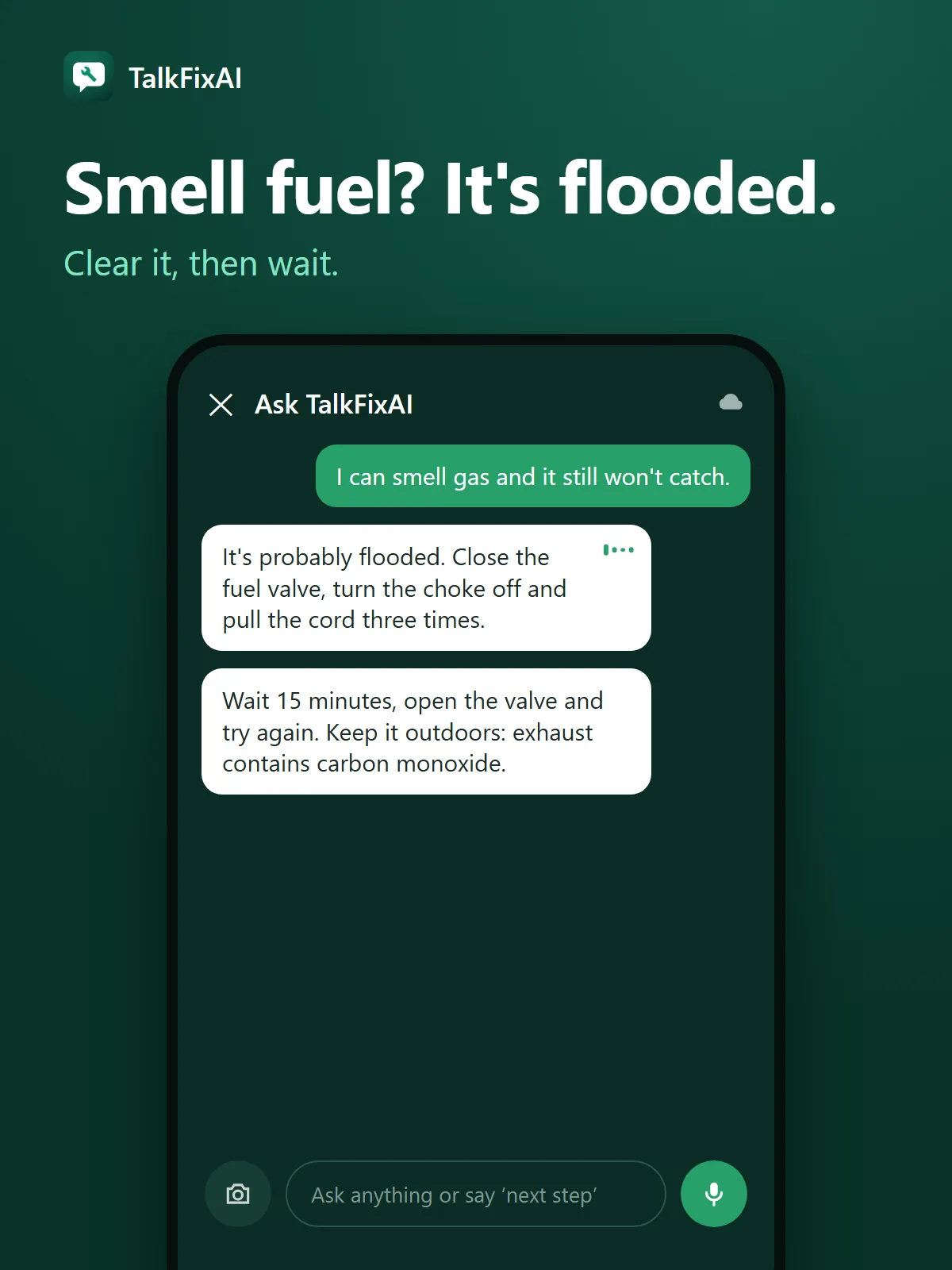
  3. Illustrated TalkFixAI chat. You: “I can smell gas and it still won't catch.” TalkFixAI: “It's probably flooded. Close the fuel valve, turn the choke off and pull the cord three times.”
    Step 3Smell fuel? It's flooded.Clear it, then wait.

Want TalkFixAI to talk you through this repair hands-free while your hands are busy? Try TalkFixAI, the free repair assistant that answers by voice, even offline.

More fixes to try