Why a car will not start
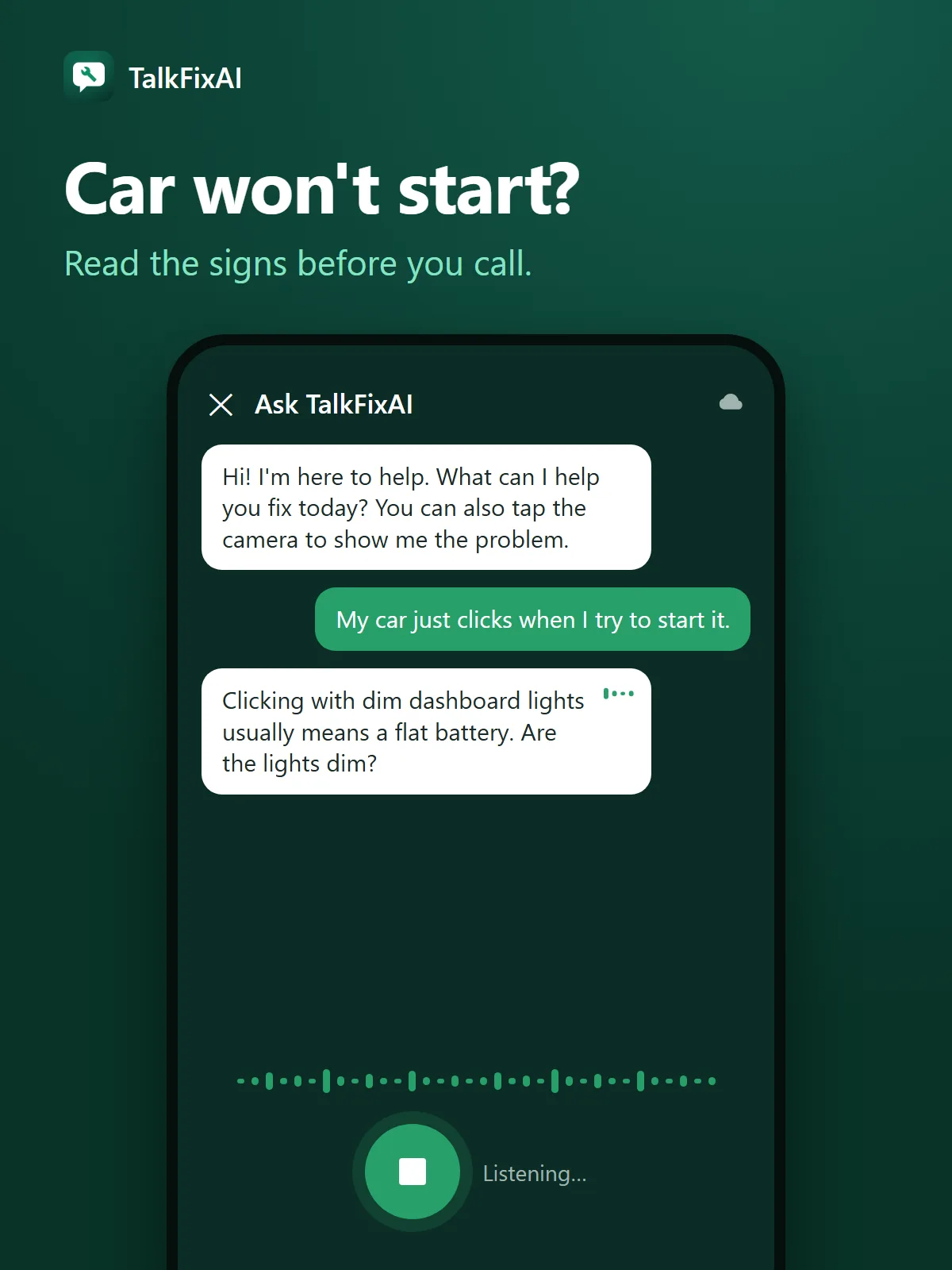
Starting a petrol (gasoline) or diesel car takes a strong 12-volt battery to turn the starter motor, then fuel, air and a spark (or compression in a diesel) to keep the engine running. A flat or worn battery, loose or corroded battery cables, or a failed starter motor stop the engine turning. If it turns but does not fire, the cause is usually in the fuel or ignition system.
Batteries most often go flat after lights or accessories are left on, after the car has been parked for a long time, in very cold weather, or simply because the battery is old. A battery that keeps going flat after a full recharge usually needs testing or replacing, and a mechanic can also check the alternator, which charges it while you drive.
Petrol, diesel, hybrid and electric
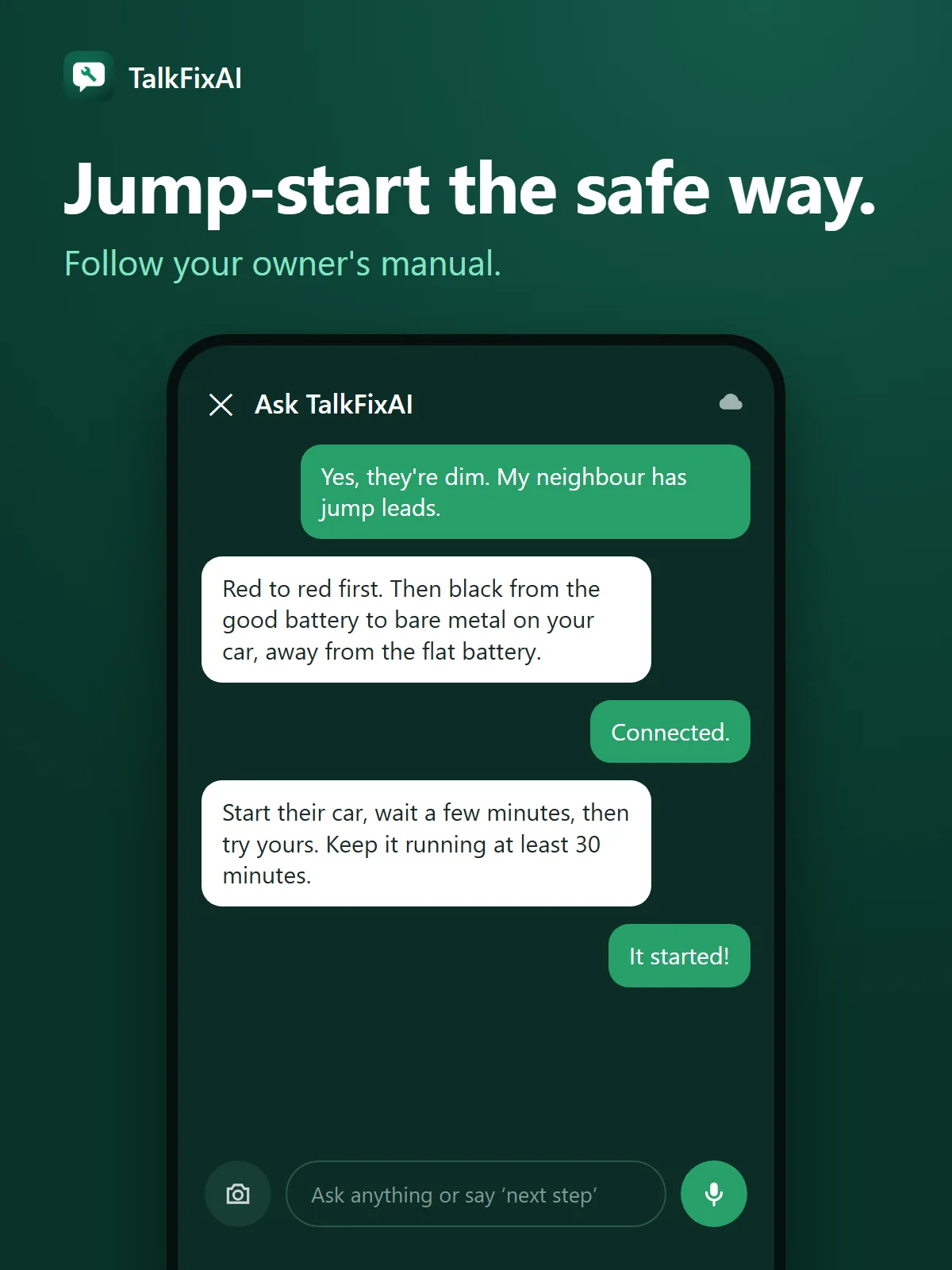
Hybrids and electric cars also have a 12-volt battery that powers the computers and can go flat. Many have special jump-start terminals under the bonnet or in a fuse box, and some should never be used to jump-start another car. Follow your owner's manual exactly, and never touch the orange high-voltage cables. Do not try to push-start an automatic car.
What to tell roadside assistance
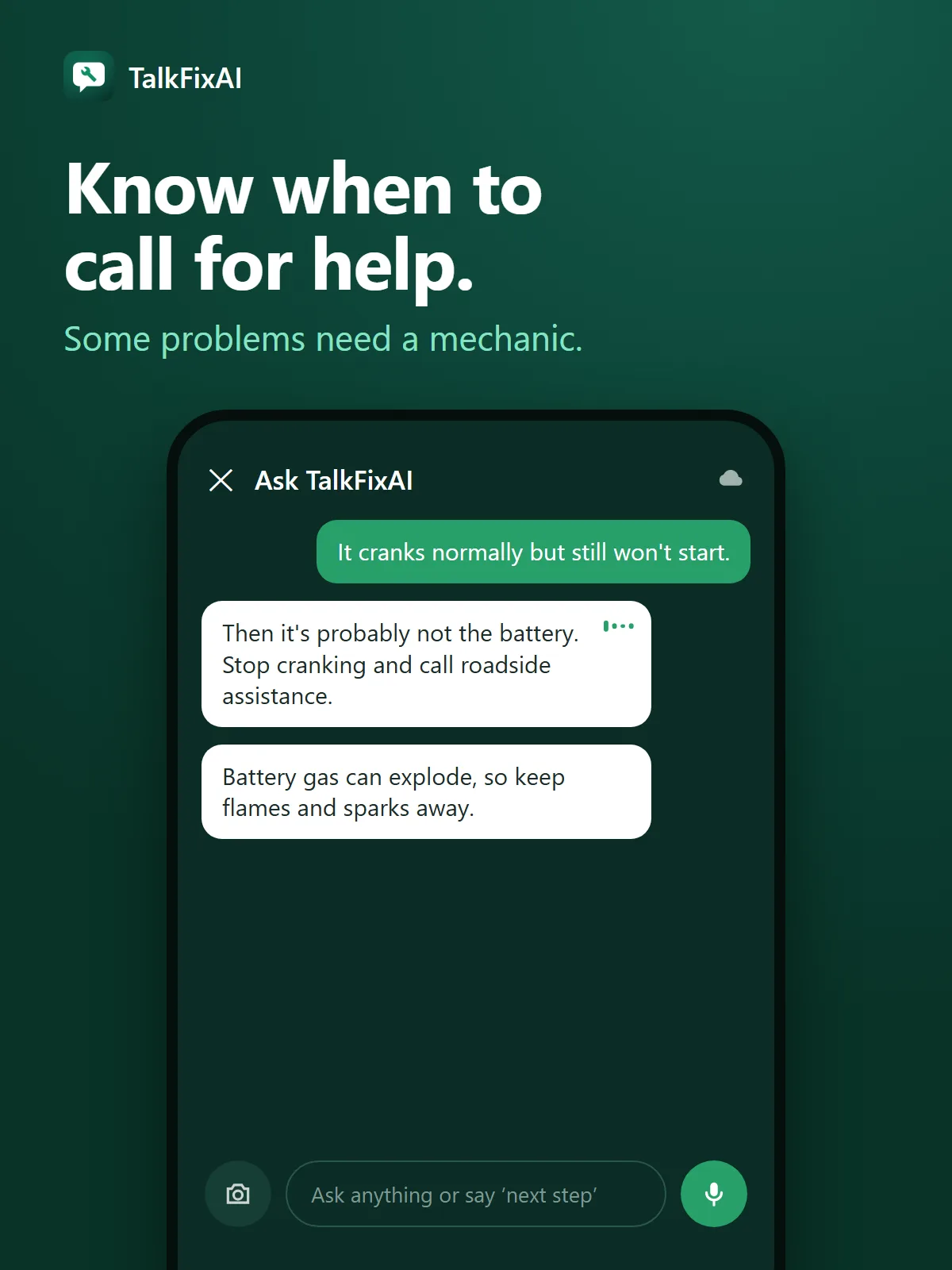
Give your location, the car's make, model and year, whether the dashboard lights come on, whether you hear clicking or cranking, and whether anything was left on. That helps them send the right help, such as a jump-start, a replacement battery or a tow.