Tubelight Flickering or Not Starting? How to Fix It

In an older fluorescent tubelight, flickering or failing to start is usually a worn-out tube (blackened ends) or a faulty starter, the small cylinder plugged into the fitting. Switch off the power, replace the starter first because it is cheap, then the tube if the ends are dark.

LED tubes have no starter; a flickering LED tube usually needs a new tube or driver.
By , maker of TalkFixAI · Published

Power off, then the starter, then the tube

  1. Step 1: Turn off the switch and the breaker

    Switch the light off at the wall, then switch off the breaker for that circuit at the distribution board. Wait a few minutes for the tube to cool.

  2. Step 2: Check what kind of tube you have

    A fluorescent tubelight usually has a small plug-in starter (a cylinder about the size of a thumb) on the fitting and a heavy choke or ballast inside it. An LED tube or LED batten often has no starter, and the tube may be marked "LED". The next steps are for fluorescent tubes; for LED, skip to the last step.

  3. Step 3: Remove the tube and look at the ends

    Hold the tube near both ends, rotate it a quarter turn and lower it out of the holders. Dark or black bands near the ends mean the tube is near the end of its life. Also check that the pins are straight and the holders are not cracked or loose.

  4. Step 4: Replace the starter

    Twist the starter anticlockwise and pull it out. Fit a new starter with the same rating (it is printed on the side) and twist it clockwise to lock. Starters are inexpensive and are a common cause of a tube that blinks on and off without fully lighting.

  5. Step 5: Refit or replace the tube

    If the ends were black, fit a new tube with the same length and wattage. Line the pins up with the slots, push them in and rotate a quarter turn until the tube clicks into place.

  6. Step 6: Restore power and test

    Switch the breaker back on, then the wall switch. A fluorescent tube can flicker for a second or two on start-up; continuous flickering or a humming fitting after a new tube and starter suggests a faulty choke or wiring. For an LED tube that still flickers, replace the tube or have the driver checked.

Common signs and what they usually mean

  • Blinks on and off but never lights fully: usually the starter.
  • Ends glow but the middle stays dark: often a stuck starter.
  • Black ends and dim light: the tube is worn out.
  • Loud hum, burning smell or a hot fitting: a failing choke or wiring fault. Switch off and call an electrician.

Many homes are replacing old fluorescent fittings with LED battens, which use less electricity and have no starter or choke. Replacing the whole fitting is an electrician's job if you are not confident with wiring.

Disposing of old tubes

Do not break fluorescent tubes or throw them in household waste where e-waste or hazardous-waste collection is available. Ask your local municipality, electrical shop or recycling centre about collection points.

Parts and tools you may need

Most fixes in this guide need no parts, so do the checks first. If you do need one, match it to your brand and model before you buy.

As an Amazon Associate, AICK Studio earns from qualifying purchases. It does not change the price you pay.

When to call an electrician

Call an electrician if:

  • the fitting hums loudly, smells of burning or feels hot,
  • a new tube and starter do not fix the flicker,
  • the holders are cracked, loose or scorched,
  • the light flickers along with other lights in the house, which can mean a supply or wiring problem.

Tubelight and starter questions

Why is my tubelight flickering?

In a fluorescent tubelight, the most common causes are a faulty starter or a worn-out tube. Less often, the choke or the wiring is failing. In an LED tube, flicker usually comes from the tube itself or its driver.

How do I know if the starter or the tube is bad?

Replace the starter first because it is the cheapest part. If the tube ends are blackened or the light stays dim with a new starter, replace the tube.

Does an LED tubelight have a starter?

Most LED tubes and battens do not need a starter. Some retrofit LED tubes come with a dummy starter or ask you to remove the old one; follow the instructions on the tube’s packaging.

Is a flickering tubelight dangerous?

Brief flicker on start-up is normal for fluorescent tubes. Continuous flicker is usually a worn part rather than a danger, but a humming, hot or burning-smelling fitting should be switched off and checked by an electrician.

Checked against: US EPA: Cleaning up a broken CFL (fluorescent lamp).

How TalkFixAI talks you through a fix

The screens below illustrate a TalkFixAI conversation that follows the steps in this guide. Your own conversation will depend on what you describe.

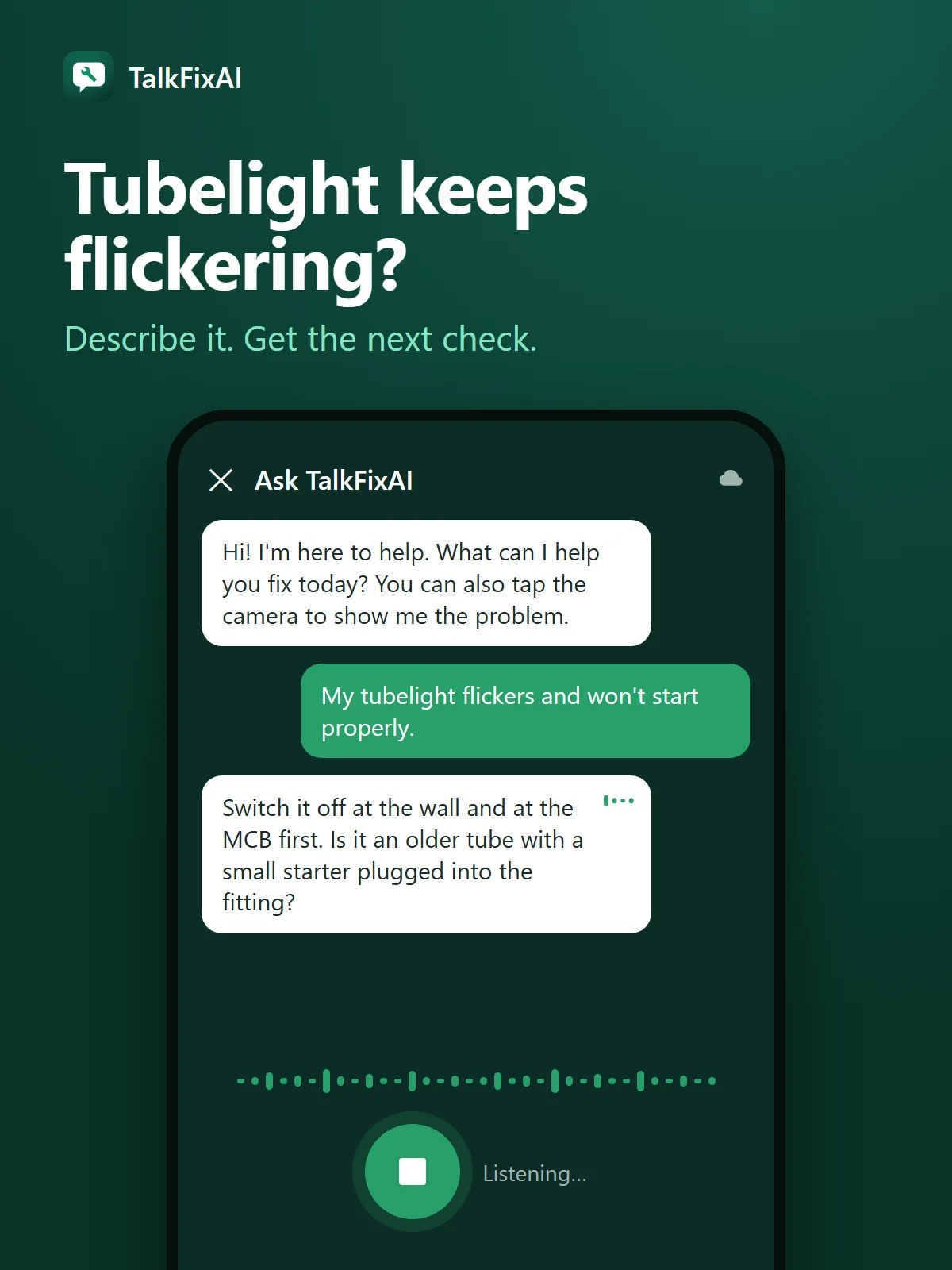
  1. Illustrated TalkFixAI chat. You: “My tubelight flickers and won't start properly.” TalkFixAI: “Switch it off at the wall and at the MCB first. Is it an older tube with a small starter plugged into the fitting?”
    Step 1Tubelight keeps flickering?Describe it. Get the next check.
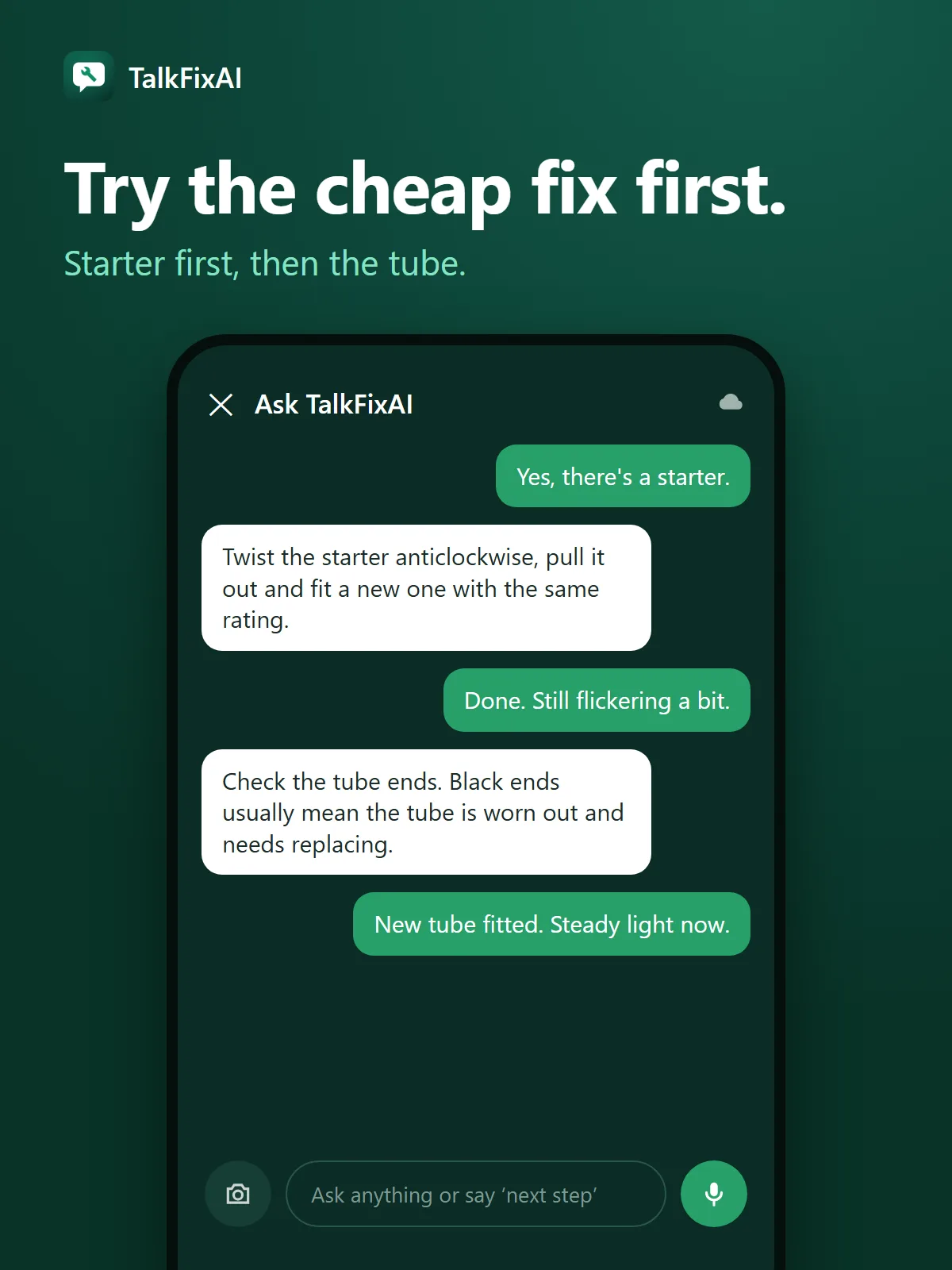
  2. Illustrated TalkFixAI chat. You: “Yes, there's a starter.” TalkFixAI: “Twist the starter anticlockwise, pull it out and fit a new one with the same rating.”
    Step 2Try the cheap fix first.Starter first, then the tube.
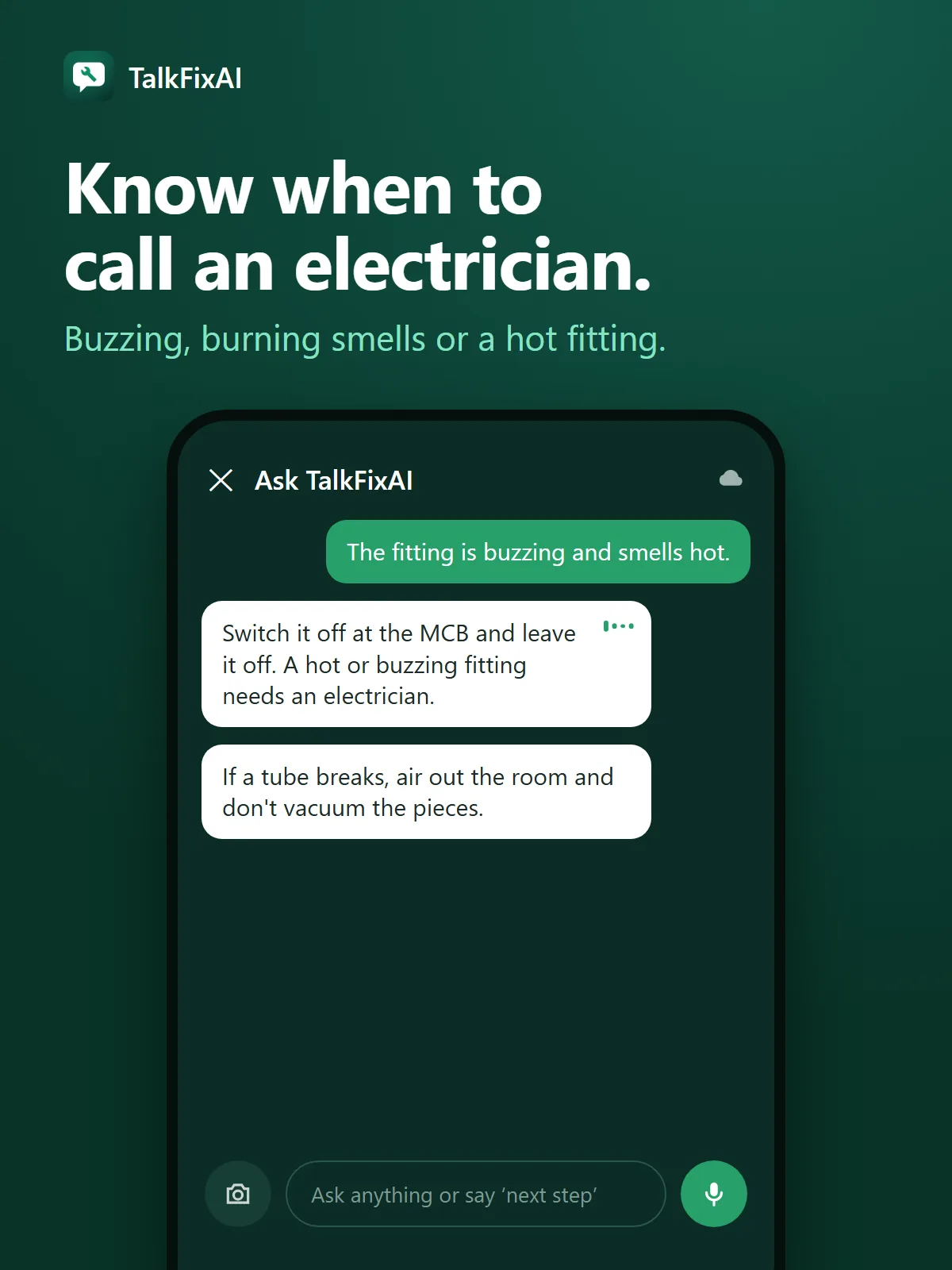
  3. Illustrated TalkFixAI chat. You: “The fitting is buzzing and smells hot.” TalkFixAI: “Switch it off at the MCB and leave it off. A hot or buzzing fitting needs an electrician.”
    Step 3Know when to call an electrician.Buzzing, burning smells or a hot fitting.

Want TalkFixAI to talk you through this repair hands-free while your hands are busy? Try TalkFixAI, the free repair assistant that answers by voice, even offline.

Other electrical problems