Slow flow from an under-sink or inline water filter usually means the cartridge is clogged and due for replacement. Close the cold-water valve feeding the filter, release the pressure, unscrew the housing, fit a new cartridge of the same model and flush it before drinking. If you have an electric RO purifier, the steps are different; see the note below.
Changing the cartridge, start to finish
Step 1: Close the water supply to the filter
Find the cold-water valve on the pipe leading to the filter and turn it clockwise until closed. Open the filtered-water tap to let remaining water drain.
Step 2: Release the pressure
If the housing has a red or black pressure-release button on top, press it until the hissing stops. Place a towel and a shallow bowl under the housing.
Step 3: Unscrew the housing
Turn the housing (the canister) anticlockwise by hand or with the housing wrench supplied with the filter. Lower it carefully: it will be full of water.
Step 4: Replace the cartridge
Pull out the old cartridge and empty the housing. Rinse the housing and check the large O-ring at the top for cracks or flattening. Insert the new cartridge, making sure it sits on the centre post.
Step 5: Refit the housing
Seat the O-ring evenly in its groove, then screw the housing back on until it is hand-tight plus a little more with the wrench. Do not overtighten; that can crack the housing or pinch the O-ring.
Step 6: Turn the water on and flush
Open the supply valve slowly and check for drips around the housing. Run the filtered tap for the time your filter's instructions give (often a few minutes) to clear air and fine carbon particles before drinking.
How often should the cartridge be changed?
Replacement intervals depend on the cartridge and how much water you use. Many manufacturers suggest a range in months or litres/gallons. Mark the date on the housing with a marker when you change it, and change sooner if the flow slows or the taste returns.
If you have an electric RO purifier
Many homes in India use an electric RO (reverse osmosis) purifier with several stages. Slow output can come from clogged pre-filters, a worn RO membrane, low inlet pressure or a full storage tank. Unplug the unit before checking it. Cleaning or replacing the membrane and checking the pump are usually done by the manufacturer's service technician.
Parts and tools you may need
Most fixes in this guide need no parts, so do the checks first. If you do need one, match it to your brand and model before you buy.
- Replacement filter cartridgeMatch the housing size and the micron rating printed on the old cartridge.Find on Amazon: Replacement filter cartridge →
- Filter housing wrenchFor a housing that is too tight to unscrew by hand. Match the housing brand.Find on Amazon: Filter housing wrench →
- Housing O-ring and silicone greaseReplace a flattened or cracked O-ring so the housing does not leak.Find on Amazon: Housing O-ring and silicone grease →
As an Amazon Associate, AICK Studio earns from qualifying purchases. It does not change the price you pay.
When to call a plumber or the filter maker
Call a plumber or the filter manufacturer's service team if:
- the housing leaks after a new O-ring and correct tightening,
- the housing is cracked or the threads are damaged,
- flow is still slow with a new cartridge, which can mean low supply pressure,
- you have an RO or UV purifier with an electrical fault, a noisy pump or an error light.
Cartridge and flow questions
Why is my water filter so slow?
The most common reason is a clogged cartridge that has trapped as much sediment as it can hold. Low water pressure in the house or a kinked supply line can also slow the flow.
Do I need to flush a new water filter cartridge?
Yes. Most cartridges need a short flush to clear air and fine carbon particles. Follow the time given in your filter’s instructions before drinking the water.
My housing is stuck. How do I open it?
Make sure the pressure is released first, then use the housing wrench that came with the filter. Do not use a pipe wrench on plastic housings; it can crack them.
Can I clean and reuse a filter cartridge?
Generally no. Most sediment and carbon cartridges are designed to be replaced, not cleaned. Check your manufacturer’s instructions.
How TalkFixAI talks you through a fix
The screens below illustrate a TalkFixAI conversation that follows the steps in this guide. Your own conversation will depend on what you describe.
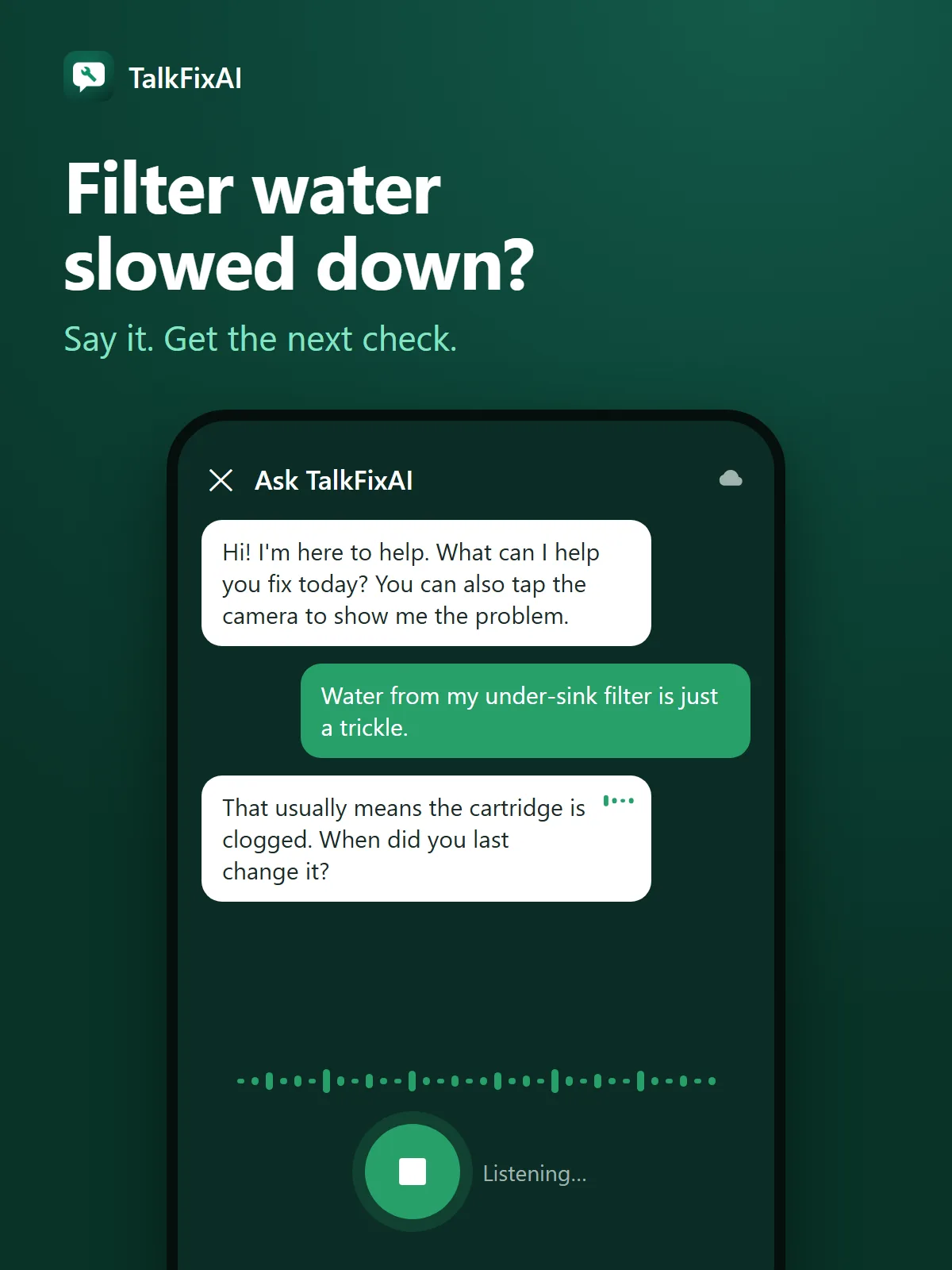
Step 1Filter water slowed down?Say it. Get the next check. 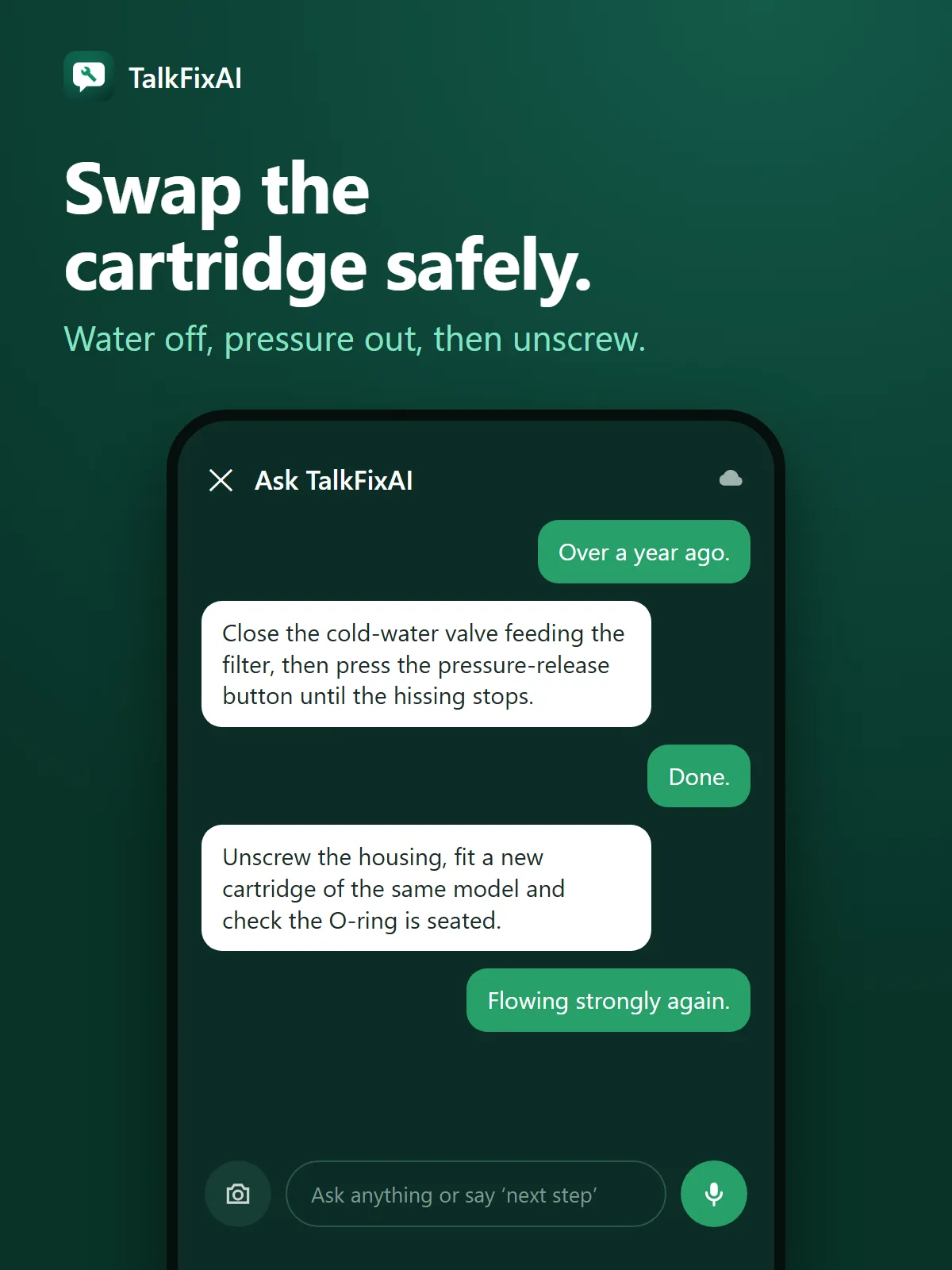
Step 2Swap the cartridge safely.Water off, pressure out, then unscrew. 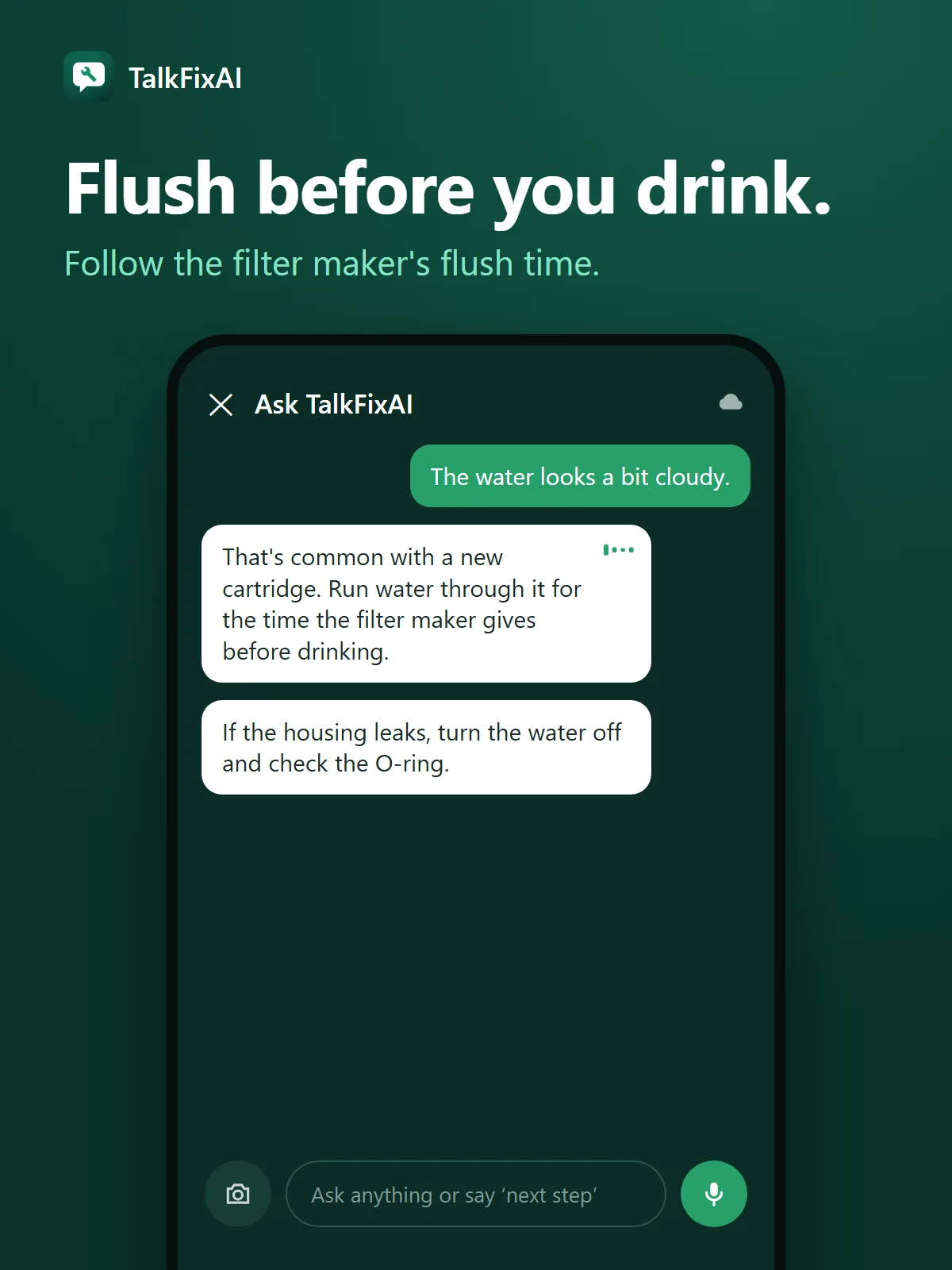
Step 3Flush before you drink.Follow the filter maker's flush time.
Want TalkFixAI to talk you through this repair hands-free while your hands are busy? Try TalkFixAI, the free repair assistant that answers by voice, even offline.