Kitchen Sink Draining Slowly? How to Unclog It Safely

A slow kitchen sink is usually blocked by grease and food scraps in the strainer, the trap under the sink or the pipe just beyond it. Clean the strainer, then plunge the drain with a few centimetres of water in the sink and the other drain blocked off.

If that doesn't work, clean out the U-shaped trap or use a drain snake; avoid chemical drain openers, which the US EPA advises against and which can burn skin and eyes.

By , maker of TalkFixAI · Published

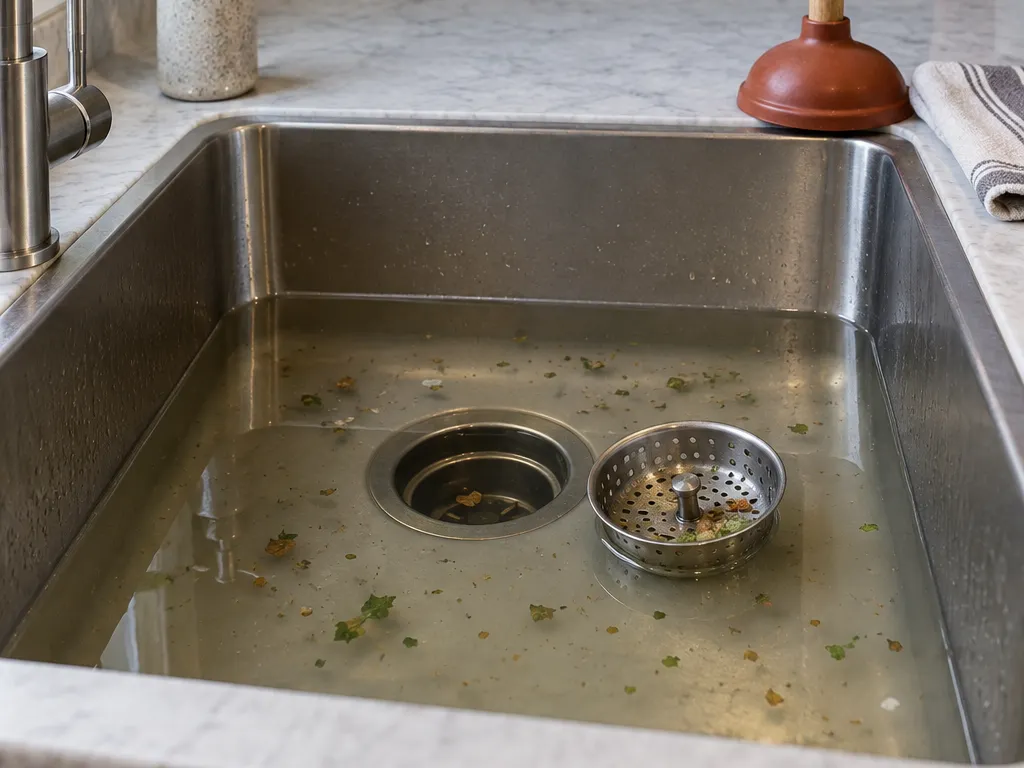
A stainless steel kitchen sink with dirty standing water, the strainer basket lifted out and a plunger nearby

Strainer, plunger, snake, trap

  1. Step 1: Clear the strainer and stopper

    Lift out the strainer basket or stopper and empty it into the bin. Food scraps, tea leaves and grease often collect right at the top of the drain. Scrub the basket and the drain opening, refit it and run water to see whether the flow has improved.

  2. Step 2: Run the disposal, if you have one

    If your sink has a garbage disposal, run it with cold water for a minute: a disposal full of food can slow the whole sink. If it hums but doesn't turn, switch it off and follow the maker's instructions for freeing it; never reach inside.

  3. Step 3: Plunge the drain properly

    Use a cup plunger. On a double sink, block the other drain opening with a stopper or wet cloth. InSinkErator's method: fill the sink with about 10 cm (4 in) of water, set the plunger over the drain, press down slowly and gently, then pull up sharply. Repeat several times, then run water for a minute or two to flush the loosened debris away.

  4. Step 4: Try hot water or a drain snake

    For greasy, slow drains, the US EPA suggests boiling water or a drain snake instead of chemical drain openers. Only pour very hot water into an empty sink, and pour slowly. A hand-cranked drain snake (auger) can reach blockages beyond the plunger: feed it in gently, turn it to grab or break up the clog, and pull it back out.

  5. Step 5: Clean out the trap

    Put a bucket under the U-shaped pipe (trap) below the sink. On most plastic traps you can unscrew the two large slip nuts by hand. Lower the trap, empty it into the bucket, clean it out with an old brush, and check the pipe going into the wall for a clog. Refit it with the washers the right way round, hand-tighten the nuts, and run water to check for leaks.

  6. Step 6: Keep it flowing

    Scrape plates into the bin, wipe greasy pans with a paper towel before washing them, and never pour cooking oil or fat down the sink: it hardens in the pipes. Use the strainer basket every time.

Why a kitchen sink drains slowly

Kitchen drains clog mostly with grease and fat that cool and stick to the inside of the pipe, catching food scraps, coffee grounds and rice as they pass. The blockage usually builds up in the trap under the sink or the first section of pipe into the wall. Bathroom sinks clog more with hair and soap.

Why to avoid chemical drain openers

Chemical drain cleaners are often strongly caustic. They can burn skin and eyes if they splash back, especially if the drain is completely blocked and the product sits in standing water. The US EPA advises avoiding chemical drain openers and using boiling water or a drain snake instead, particularly if your home has a septic system. If you do use one, follow the label exactly, wear gloves and goggles, never mix products and don't plunge afterwards.

If more than one drain is slow

If the kitchen sink, bathroom and shower all drain slowly, or water backs up in one fixture when another drains, the blockage is probably further down the main drain line. That is a job for a plumber with a long, powered drain snake.

Parts and tools you may need

Most fixes in this guide need no parts, so do the checks first. If you do need one, match it to your brand and model before you buy.

As an Amazon Associate, AICK Studio earns from qualifying purchases. It does not change the price you pay.

When to call a licensed plumber

Call a licensed plumber if:

  • the sink is still blocked after plunging, snaking and cleaning the trap,
  • several drains in the house are slow, or water backs up into another fixture,
  • you smell sewage or hear gurgling from other drains,
  • the trap or pipe joints leak, or the pipes are old metal that won't come apart,
  • a chemical drain cleaner has already been poured in and the sink is still full.

Tell the plumber if any chemical has been used, so they can protect themselves.

Drain cleaners and other sink questions

Why is my kitchen sink draining slowly?

Usually grease and food scraps have built up in the strainer, the U-shaped trap under the sink or the pipe just beyond it. Grease poured down the drain cools and sticks to the pipe, catching more debris over time.

How do I plunge a kitchen sink?

Block the other drain on a double sink, fill the sink with about 10 cm (4 in) of water, place a cup plunger over the drain, press down gently, then pull up sharply. Repeat several times and run water afterwards.

Are chemical drain cleaners safe?

Chemical drain cleaners are risky. Many are caustic and can burn skin and eyes, especially if they splash back. The US EPA advises avoiding chemical drain openers and using boiling water or a drain snake instead. Never mix products or plunge after using one.

Does baking soda and vinegar unclog a drain?

Baking soda and vinegar may freshen a drain, but it is unlikely to clear a real grease or food blockage. A plunger, drain snake or cleaning the trap is more effective.

How do I stop my kitchen sink clogging again?

Don’t pour cooking oil or fat down the sink, scrape plates into the bin, use the strainer basket every time and wipe greasy pans before washing them.

Checked against: US EPA: How to care for your septic system (drain openers); InSinkErator: Fixing a clogged garbage disposal.

How TalkFixAI talks you through a fix

The screens below illustrate a TalkFixAI conversation that follows the steps in this guide. Your own conversation will depend on what you describe.

  1. Illustrated TalkFixAI chat. You: “My kitchen sink is full of water and barely draining.” TalkFixAI: “First, lift out the strainer basket and empty it. Food and grease often collect right at the top.”
    Step 1Sink draining slowly?Clear it without harsh chemicals.
  2. Illustrated TalkFixAI chat. You: “Strainer's clean. Still slow.” TalkFixAI: “It's a double sink? Block the other drain with a stopper or wet cloth.”
    Step 2Plunge it the right way.Block the other drain first.
  3. Illustrated TalkFixAI chat. You: “Should I pour drain cleaner in?” TalkFixAI: “Better not. It can splash back and burn skin and eyes. Clean out the trap under the sink or use a drain snake.”
    Step 3Skip the drain chemicals.Try the trap or a snake.

Want TalkFixAI to talk you through this repair hands-free while your hands are busy? Try TalkFixAI, the free repair assistant that answers by voice, even offline.

Other plumbing fixes