Key Won’t Turn in the Lock? What to Do Without Breaking It

Don't force the key: a snapped key inside the lock is much harder to fix. Check that you have the right key and that it is not bent or worn, push or pull the door to take pressure off the bolt, and wiggle the key gently while turning.

If the lock is still stiff, apply a small amount of lock lubricant into the keyway (the type your lock's maker recommends, often a PTFE lock spray) and work the key in and out a few times.
By , maker of TalkFixAI · Published

Five gentle checks before you force anything

  1. Step 1: Check the key

    Make sure you have the right key, inserted the right way up and pushed fully in. Look for bends, cracks or worn teeth; a freshly cut copy that is slightly off can also stick. Try the spare key if you have one: if the spare works, the problem is the key, not the lock.

  2. Step 2: Take pressure off the bolt

    Push the door firmly towards the frame, or pull it towards you by the handle, while you turn the key. If the door has dropped or swollen, the bolt can bind against the strike plate and stop the key from turning.

  3. Step 3: Wiggle gently while turning

    Apply light turning pressure and gently jiggle the key up and down, and slightly in and out. Stop if you feel the key bending.

  4. Step 4: Use a dry lock lubricant

    Apply a light spray or a few drops of a lubricant made for locks into the keyway. Use the type your lock's maker recommends: many recommend a PTFE lock lubricant, and makers disagree about graphite, so check first. Avoid cooking oil and heavy grease, which collect dust and gum up the pins.

  5. Step 5: Work the lubricant in

    Insert the key fully, pull it out, and repeat several times. Then try turning it gently. Wipe off any excess from the key and the lock face.

Lock or door?

If the key turns easily when the door is open but sticks when it is closed, the lock is fine and the door is out of line. Common causes are loose hinges, a door swollen by humidity or monsoon rain, or a strike plate that has shifted. Tightening the hinge screws often helps.

In freezing weather, a lock can freeze. Warm the key (not with an open flame near the door) or use a lock de-icer, then dry and lubricate the lock afterwards.

Parts and tools you may need

Most fixes in this guide need no parts, so do the checks first. If you do need one, match it to your brand and model before you buy.

As an Amazon Associate, AICK Studio earns from qualifying purchases. It does not change the price you pay.

When you need a locksmith

Call a locksmith if:

  • the key breaks or gets stuck in the lock,
  • the key turns but the bolt does not move,
  • the lock is still stiff after lubrication,
  • you are locked out, or a child or pet is locked inside.

Stuck locks and broken keys

Why won’t my key turn in the lock?

The most common causes are a worn or badly cut key, dirt or dry pins inside the lock, and a door that is out of line so the bolt binds against the frame.

Can I use WD-40 on a sticking lock?

Use a lubricant made for locks instead, ideally the one your lock’s manufacturer recommends; many recommend a PTFE lock spray. General-purpose sprays clean but do not lubricate for long, and heavy oils collect dust.

What should I do if my key breaks in the lock?

Stop turning and do not push the broken piece deeper. If part of the key sticks out, you may be able to pull it straight out with tweezers; otherwise call a locksmith.

Why does my key only turn when the door is open?

The door is out of alignment with the frame, so the bolt rubs against the strike plate. Tighten loose hinge screws and push the door while turning the key, or ask a carpenter to adjust the door or strike plate.

Checked against: Master Lock: Padlock care and service (lubrication).

How TalkFixAI talks you through a fix

The screens below illustrate a TalkFixAI conversation that follows the steps in this guide. Your own conversation will depend on what you describe.

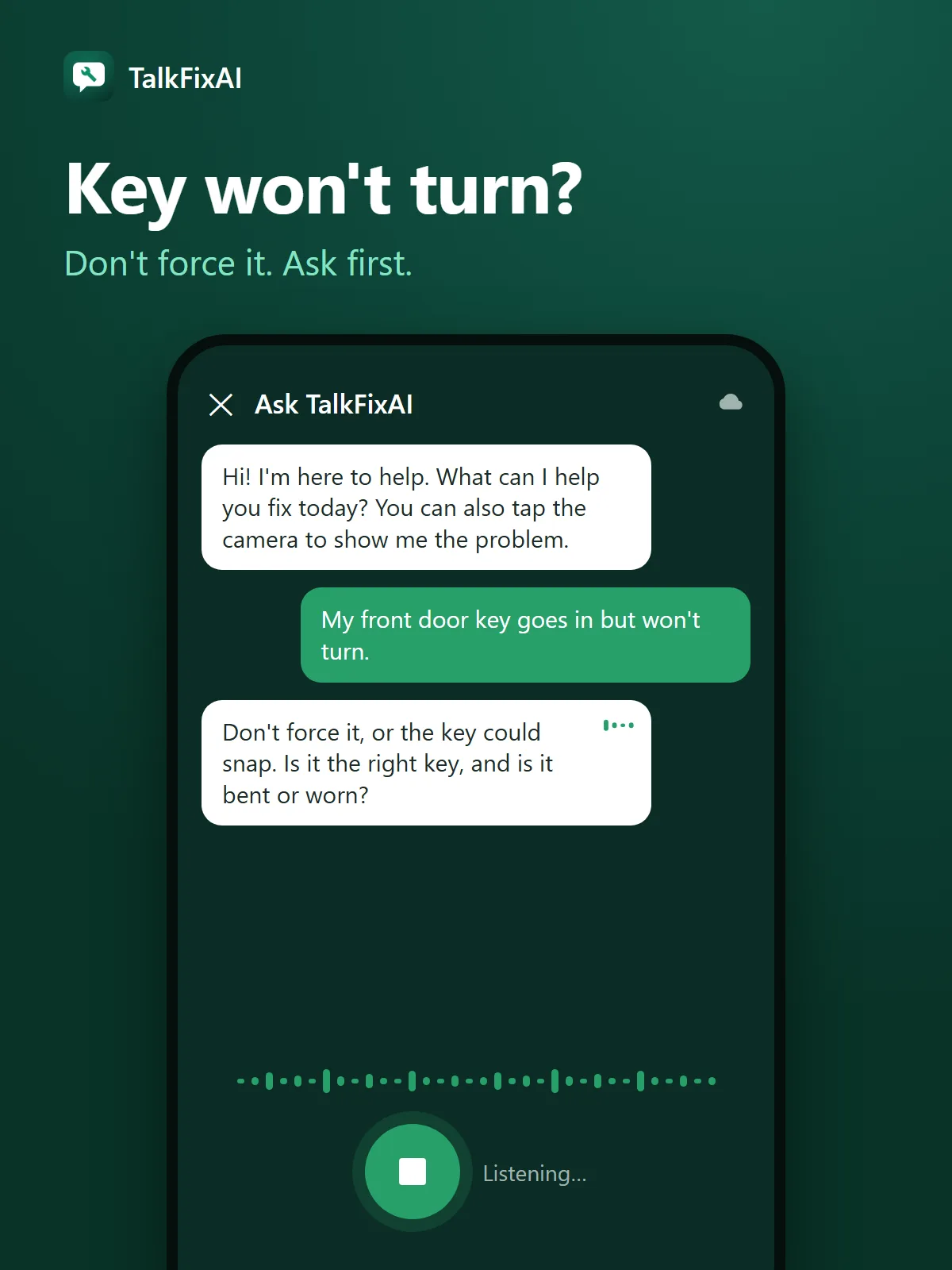
  1. Illustrated TalkFixAI chat. You: “My front door key goes in but won't turn.” TalkFixAI: “Don't force it, or the key could snap. Is it the right key, and is it bent or worn?”
    Step 1Key won't turn?Don't force it. Ask first.
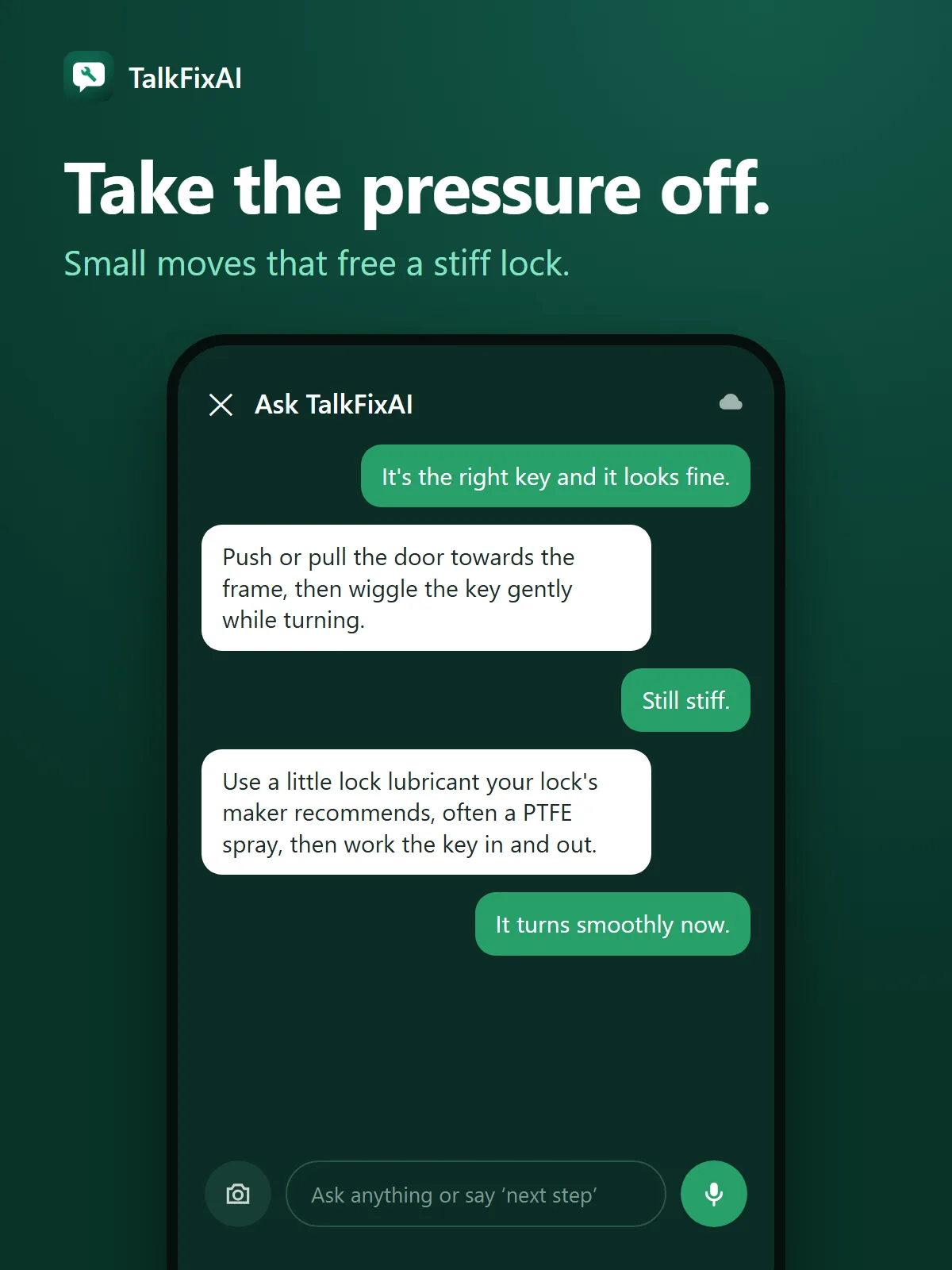
  2. Illustrated TalkFixAI chat. You: “It's the right key and it looks fine.” TalkFixAI: “Push or pull the door towards the frame, then wiggle the key gently while turning.”
    Step 2Take the pressure off.Small moves that free a stiff lock.
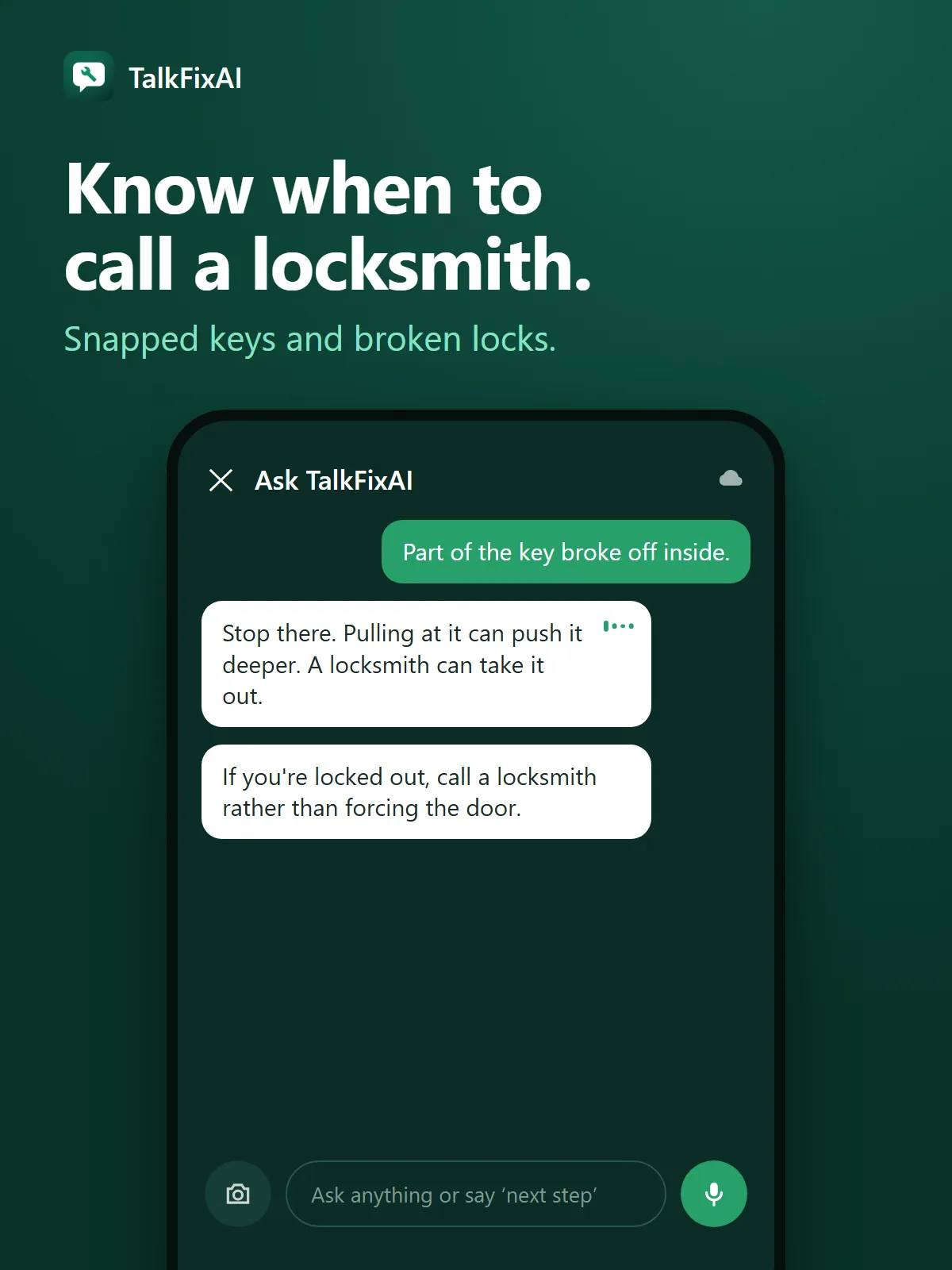
  3. Illustrated TalkFixAI chat. You: “Part of the key broke off inside.” TalkFixAI: “Stop there. Pulling at it can push it deeper. A locksmith can take it out.”
    Step 3Know when to call a locksmith.Snapped keys and broken locks.

Want TalkFixAI to talk you through this repair hands-free while your hands are busy? Try TalkFixAI, the free repair assistant that answers by voice, even offline.

Other fixes around the house